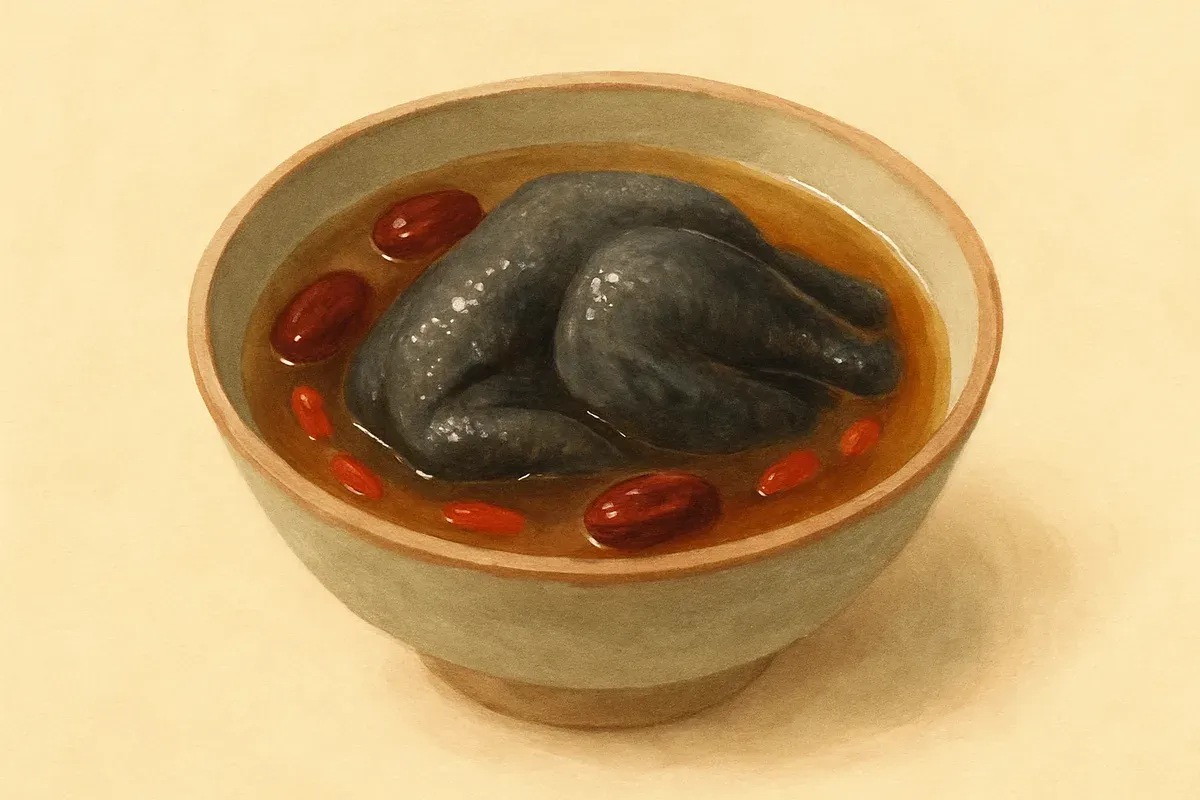
Black chicken herbal soup (药材乌鸡汤)
yao cai wu ji tang (药材乌鸡汤)
The tonic soup of the later confinement weeks: silkie chicken simmered slowly with dang gui, astragalus, red dates and goji into a deep, restorative broth.
If confinement has one archetypal dish, it is a pot of herbal chicken soup drawn slowly over an afternoon until the kitchen smells of it. This is that soup: dark silkie chicken and a small handful of tonic herbs, simmered into a deep, restorative broth for the rebuilding weeks of the month.
Why this soup
The recipe is really the whole framework of confinement in a bowl. It pairs the qi tonics, astragalus and dang shen, with the blood herb dang gui, because birth is understood to spend both qi and blood and the month sets out to rebuild them. The red dates and goji round the herbs into something that tastes like food. It is the edible form of qi, blood, cold and wind.
A soup for the later weeks
The stronger herbs mean this is not a first-week dish. Hold it back until appetite and digestion have settled, usually from the second week, as our guide to how the 30 days are structured explains. Made ahead and reheated, a pot lasts a couple of days and asks nothing of a tired cook. For a gentler everyday version, leave the dang gui out and lean on the milder tonics; browse the rest of the soups and recipes for more.
The recipe
- Prep
- 15 min
- Cook
- 2 hr
- Total
- 2 hr 15 min
- Serves
- 4 as part of a meal
Why this ingredient
Silkie (black) chicken (乌鸡)
The small black-boned silkie is held in the tradition to be more tonifying than an ordinary chicken, which is why it is the customary base for a rebuilding herbal soup. Its dark flesh gives up a rich broth over long simmering, carrying the herbs it is cooked with.
Why this ingredient
Dang gui (当归)
The pre-eminent blood herb of the postpartum kitchen, reached for to rebuild the blood the tradition understands birth to spend. It is potent, so it is used in small amounts and often on a practitioner's guidance, especially while breastfeeding.
Ingredients
- 1 black (silkie) chicken, about 800 g, chopped into large pieces The prized dark-fleshed bird for a tonic soup. An ordinary chicken or chicken pieces on the bone work too.
- 1 tablespoon astragalus (huang qi) slices The qi tonic, left in the pot and not eaten.
- 2 short lengths of dang shen (codonopsis) A gentle qi tonic that softens enough to eat.
- 3 to 4 slices dang gui (angelica root) The blood herb, used sparingly. Leave out for a gentler soup.
- 8 red dates (jujubes), pitted Blood-nourishing sweetness that rounds the herbs.
- 1 tablespoon goji berries Added near the end so they stay plump.
- 5 slices old ginger For warmth and to settle any strong taste.
- 2 litres water, and salt to taste
Method
- 1 Rinse the chicken and blanch it briefly in boiling water, then drain and rinse again. This gives a cleaner broth.
- 2 Rinse the astragalus, dang shen, dang gui and red dates. Put them in a large pot with the chicken, ginger and water.
- 3 Bring to the boil, skim off any foam, then lower to a gentle simmer, cover, and cook for 1.5 to 2 hours until the broth is deep and the chicken very tender.
- 4 Add the goji berries and salt in the last few minutes.
- 5 Serve the broth and chicken hot. The softened dang shen and red dates are good to eat; leave the woody astragalus and dang gui in the pot.
Notes and substitutions
- A slow cooker or thermal pot suits this well: bring to the boil, then leave it to draw for several hours.
- For a stronger tonic add a small handful of dried longan; to keep it gentle, leave out the dang gui.
- It keeps for two days in the fridge and reheats well; skim the set fat from the top if you prefer it lighter.
Before you cook this
- Dang gui is a potent blood-moving herb. Use it modestly, and if you are unsure, or are managing bleeding or a health condition, check with a qualified Chinese medicine practitioner or leave it out.
- A rich, warming tonic, so it belongs to the later weeks rather than the first few days.
Sources
- The Zuo Yuezi Guide
- Zuo Yuezi: An American Mother's Guide to Chinese Postpartum Recovery (Guang Ming Whitley)
Common questions
What is a black chicken?
A silkie: a small breed with black skin, bones and dark flesh, sold whole at Chinese grocers and sometimes labelled black-boned chicken. The tradition prizes it as especially tonifying, which is why it is the usual choice for a herbal soup, though an ordinary chicken works too.
When in the month should I drink it?
The later weeks. The stronger tonic herbs like dang gui and astragalus are held back from the delicate first days, and come into their own once digestion and appetite have settled, usually from the second week.
Is it safe while breastfeeding?
The soup itself is nourishing and widely eaten postpartum, but dang gui is a stronger herb best used in modest amounts, and some prefer to check with a practitioner. If you would rather keep it gentle, leave the dang gui out and lean on the milder astragalus, dang shen, red dates and goji.