Astragalus (黄芪): the qi tonic of confinement soups
huang qi (黄芪)
Astragalus, or huang qi, is the energy-building root at the heart of confinement tonic soups. What it does, how it pairs with dang gui, and when to use it.
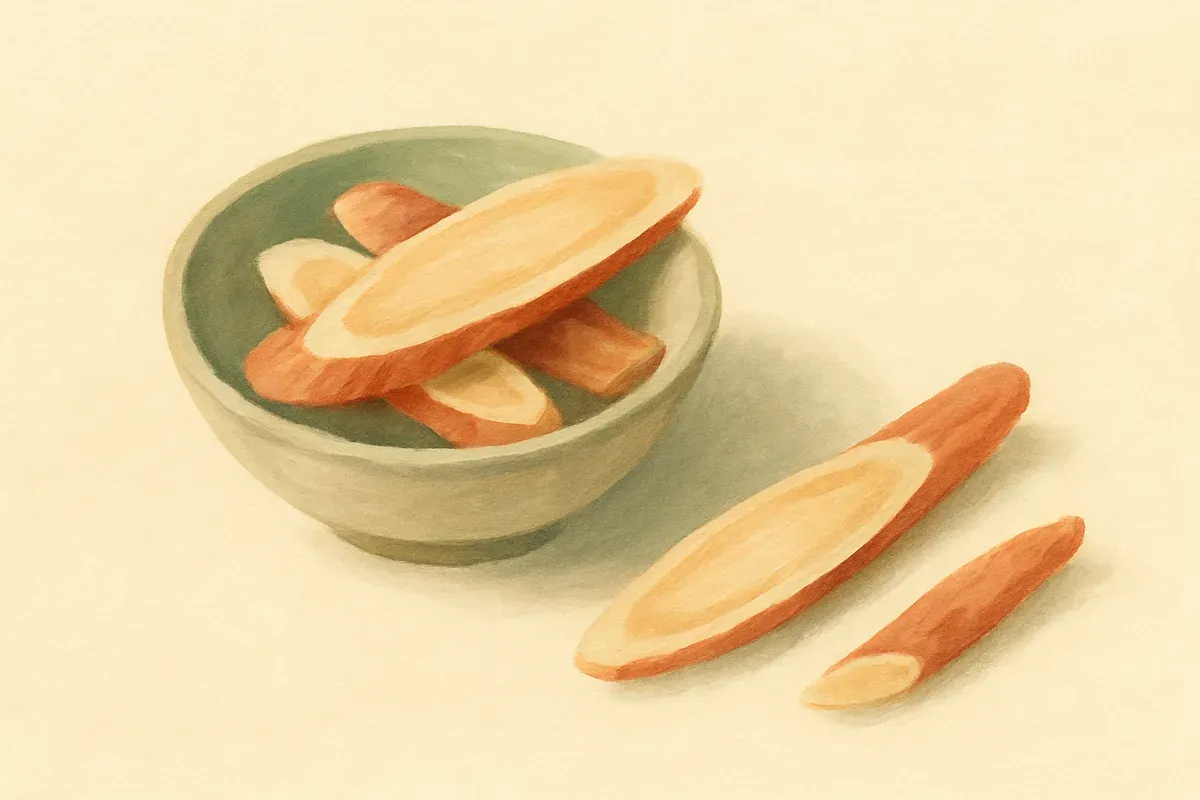
If you have ever lifted the lid on a confinement chicken soup and found pale, tongue-shaped wooden slices bobbing among the red dates, that is astragalus. It adds little flavour and is never eaten, yet it is one of the herbs the tradition reaches for most, because of what it is understood to do rather than how it tastes.
Why the qi tonic
In TCM, astragalus is classed as warming and is valued to tonify qi and lift energy, supporting the spleen and lungs, the systems the tradition ties to digestion and vitality. Birth is understood to spend both qi and blood, and the month sets out to rebuild them. Astragalus is the everyday answer for the qi half of that equation.
Its most famous role is as a partner. Paired with the blood herb dang gui, it forms the classic qi-and-blood tonic that sits behind so many confinement soups. The idea of rebuilding both after birth is the heart of the framework we explain in qi, blood, cold and wind.
A herb for the rebuilding weeks
Astragalus is not a first-day food. The delicate early days favour gentle, easily digested dishes, and the stronger tonics arrive as the month moves into its rebuilding stage, usually from the second week. Our guide to how the 30 days are structured shows where it fits.
In the kitchen
Dried astragalus comes as thin, pale yellow slices with a woody texture. It is simmered long, an hour or more, in chicken or bone soups so it can give up its mild, faintly sweet savouriness, then left in the pot and not eaten. It sits happily alongside red dates, goji berries and dang gui in the standard confinement tonic pot. Choose slices that are pale and still slightly pliable rather than dark and brittle, and keep them airtight and dry.
A note of care
Astragalus is a tonic herb, not just a vegetable, so a little respect is due. In soup amounts it is a common and well-tolerated food, but concentrated doses are a different matter, and it can interact with immune-related medicines. If you are using it medicinally, have an autoimmune condition, or are unsure, speak to a qualified Chinese medicine practitioner or your doctor first.
Sources
- The Zuo Yuezi Guide
- Zuo Yuezi: An American Mother's Guide to Chinese Postpartum Recovery (Guang Ming Whitley)
Common questions
What does astragalus do in confinement soups?
It is used as a qi tonic, meaning it is reached for to rebuild energy after the demands of birth. Its classic role is alongside a blood-nourishing herb like dang gui, the two together forming the traditional qi-and-blood tonic that much of the later month is built around.
Is astragalus safe while breastfeeding?
In the culinary amounts used to flavour a soup, astragalus is treated as an ordinary food and is widely eaten postpartum. For concentrated or medicinal doses, or if you have an autoimmune condition or take medicines that affect the immune system, check with a qualified practitioner or your doctor before using it regularly.
When in the month should I use it?
Later rather than earlier. The first days favour gentle, easily digested food, and the stronger rebuilding tonics like astragalus come into their own from the second week, once appetite and energy are returning.