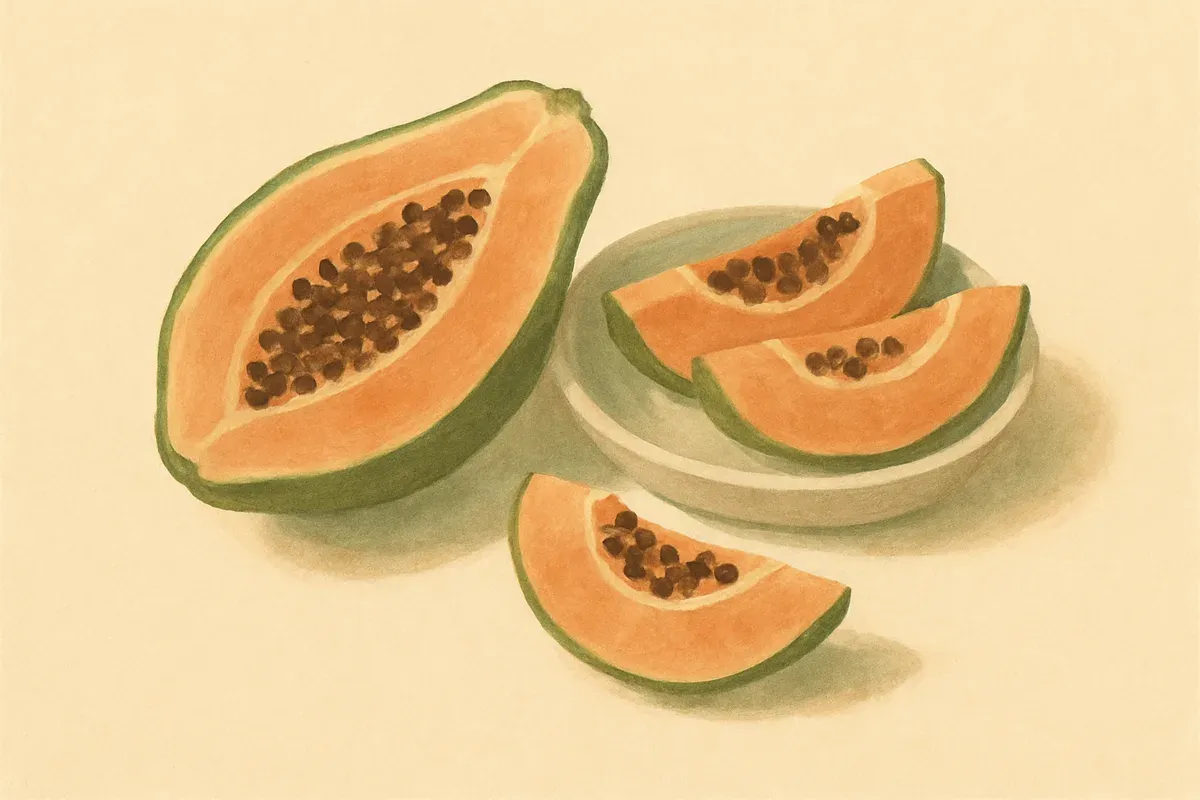
Green papaya (青木瓜): the confinement lactation food
qing mu gua (青木瓜)
Green papaya soup is the classic confinement dish for milk supply. What green papaya is, the tradition behind it, what the evidence says, and how to use it.
Of all the confinement foods tied to a specific purpose, green papaya is the one most associated with milk supply. Simmered with fish into a pale, gentle soup, it is a fixture of the early weeks, and it is worth understanding both what the tradition claims and what actually helps.
What it is
Green papaya is simply papaya picked unripe, while the fruit is still hard and the flesh pale and firm. In that state it is not sweet and is treated as a vegetable: peeled, deseeded and cut into chunks that hold their shape in a soup. Left to ripen, the same fruit becomes the soft orange papaya eaten fresh, which is a different thing entirely and not used here.
The tradition, and what helps
Across many cultures, not only Chinese, green papaya is held to support a mother’s milk. In confinement cooking it is usually paired with fish, itself considered lactation supporting and easy to digest, in a light soup suited to the first stage of the month.
It is worth being clear about what kind of claim this is. Whether a particular food increases supply is a traditional belief rather than something the evidence settles. What does reliably support milk is frequent, effective feeding or expressing, and a mother who is eating and drinking enough. A warm, nourishing, hydrating bowl of green papaya fish soup helps with that last part, and it is comforting and light when appetite is low, which is reason enough to make it.
In the kitchen
Choose a papaya that is fully green and firm with no soft or yellowing patches. Peel it, scoop out the white seeds, and cut the flesh into large chunks. It takes longer to soften than ripe fruit, so it goes into the soup early, simmered until just tender.
Green papaya belongs to the first stage dishes of the month; for that arc see how the 30 days are structured. To cook with it, start with the classic green papaya and fish soup, and browse the wider confinement kitchen in the Recipes section.
Common questions
Is green papaya different from ordinary papaya?
It is the same fruit, picked unripe. Left to ripen it becomes the soft orange sweet papaya eaten as fruit. Picked green and hard, the flesh is pale, firm and mild, and it is cooked as a vegetable rather than eaten raw and sweet.
Does green papaya actually increase milk supply?
It is a long-standing traditional belief across many cultures, and green papaya fish soup is a gentle, nourishing, hydrating meal, all of which help a feeding mother. What most reliably supports supply is frequent, effective feeding or expressing, alongside eating and drinking enough. A warm bowl of soup helps with the last of those.
Why is it cooked with fish?
Fish is itself considered a lactation supporting food in the tradition and is easy to digest in the early weeks, so the pairing doubles up on the intention. Practically, papaya and fish make a clean, light soup that suits the first stage of the month when appetite is small.
Can I use ripe papaya instead?
No. Ripe papaya is soft and sweet and falls apart in a soup, and it does not carry the traditional association. The dish needs the firm, green, unripe fruit, sold at Asian grocers, often labelled green papaya.