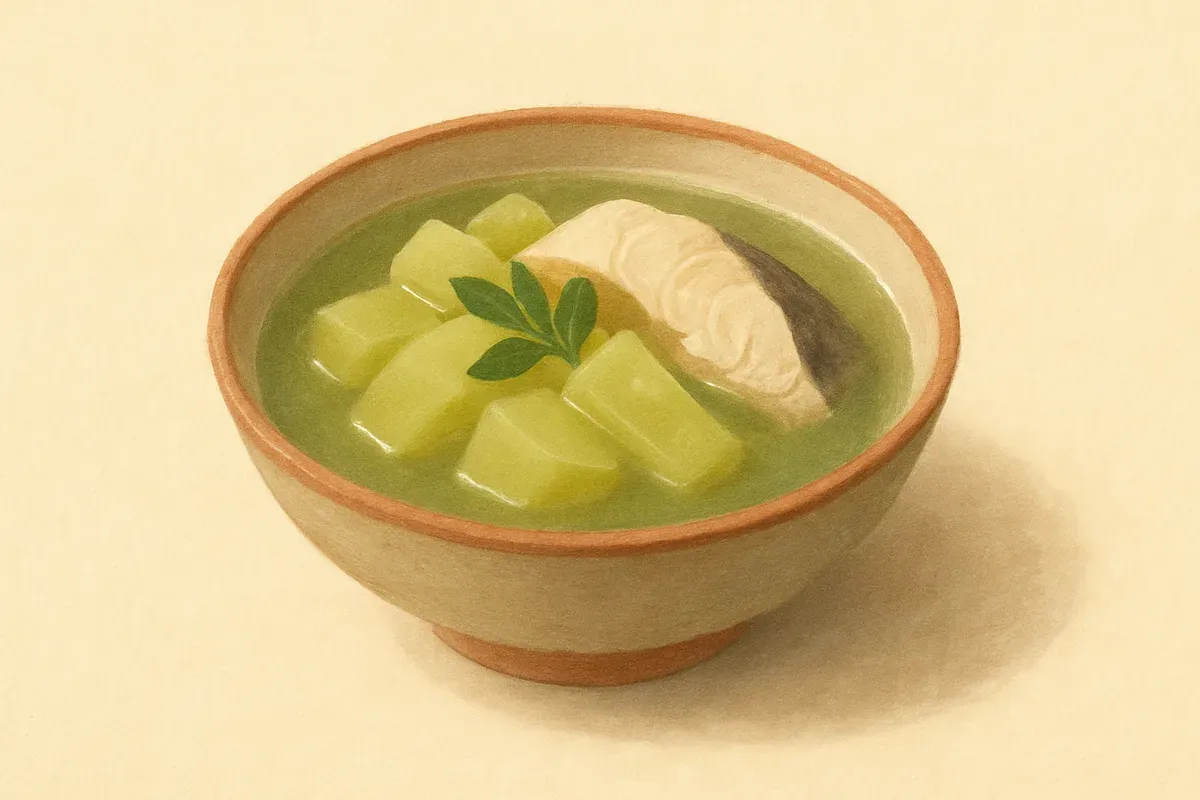
Green papaya and fish soup (青木瓜鱼汤)
qing mu gua yu tang (青木瓜鱼汤)
The classic confinement milk-supply soup: unripe green papaya and fish simmered into a milky, nourishing broth. Warm, gentle and eaten across the month.
Ask which confinement dish is meant to help with milk, and the answer, across Chinese, Malaysian and Singaporean kitchens alike, is usually this one: green papaya simmered with fish into a warm, milky, nourishing soup. It is gentle enough for any point in the month and a mainstay of the breastfeeding weeks.
Why this soup
Green papaya is one of the traditional lactation foods, covered in our green papaya spotlight, and a warm, easily taken soup is exactly the sort of steady nourishment a breastfeeding mother benefits from. As our guide to eating for milk supply and recovery notes, supply is driven mostly by frequent feeding and by staying fed and hydrated, so the soup earns its place as good, comforting food rather than a magic cure.
Getting the milky broth
The one technique worth learning is the sear and the hard boil. Frying the fish in ginger first, then boiling it hard for the first ten minutes, emulsifies the fat into the water and turns the broth a rich, creamy white. It is the same trick behind many Chinese fish and pork soups, and it is what lifts this from a thin broth to something restorative.
The recipe
- Prep
- 15 min
- Cook
- 40 min
- Total
- 55 min
- Serves
- 3 to 4 as part of a meal
Why this ingredient
Green papaya (青木瓜)
Unripe papaya is one of the classic foods the tradition associates with milk supply, which is why it is the centrepiece of the confinement lactation soups. Firm and barely sweet, it softens through simmering into a gentle, nourishing vegetable that carries the fish broth.
Why this ingredient
Fish (鱼)
A whole fish, seared and boiled hard, gives the rich, milky broth prized in these soups, both nourishing and easy on a recovering appetite. Ginger fried with it keeps the dish warming and removes any fishy edge, in keeping with the month's care around warmth.
Ingredients
- 1 small green (unripe) papaya, about 500 g, peeled, seeded and cut into chunks Firm and pale, used as a vegetable. The traditional lactation food of the dish.
- 1 whole white fish or fish head, about 500 g, cleaned (snapper or carp) A whole fish or head gives the milkiest broth. Fish pieces on the bone also work.
- 5 slices old ginger Fried with the fish to warm the dish and take away any fishiness.
- 1 tablespoon neutral oil For searing the fish, the step that makes the broth turn white.
- 1.8 litres boiling water Added hot so the broth stays at a hard boil and emulsifies.
- 1 tablespoon goji berries, and salt to taste Goji added near the end for colour and sweetness.
Method
- 1 Pat the fish very dry. Heat the oil in a pot and fry the ginger for a minute, then add the fish and sear until golden on both sides.
- 2 Pour in the boiling water, enough to cover, and keep it at a rolling boil for about 10 minutes, until the broth turns milky white.
- 3 Add the green papaya, bring back to the boil, then lower to a simmer and cook for 20 to 25 minutes until the papaya is tender.
- 4 Add the goji berries and salt in the last few minutes, and serve hot.
Notes and substitutions
- For an even smoother broth, wrap the fish in a piece of muslin before boiling so no small bones escape into the soup.
- Pork ribs can replace or join the fish for a heartier version; blanch them first.
- Choose a papaya that is fully green and firm; a papaya starting to turn yellow is ripening and too sweet for this soup.
Before you cook this
- Take care with fine fish bones, especially in a broth. Straining the soup or using a muslin bag makes it safer to drink freely.
Sources
- The Zuo Yuezi Guide
- Zuo Yuezi: An American Mother's Guide to Chinese Postpartum Recovery (Guang Ming Whitley)
Common questions
Does papaya soup really increase milk supply?
Green papaya is one of the traditional lactation foods, and a warm, nourishing soup certainly supports a breastfeeding mother by keeping her fed and hydrated. Supply itself is driven mostly by frequent, effective feeding, so enjoy the soup as good nourishment rather than a guaranteed cure.
What fish should I use?
A firm white fish or a small whole carp or snapper is traditional. A whole fish or fish head gives the richest, milkiest broth; fish pieces on the bone also work. Freshness matters more than the exact type.
How do I get a milky white broth?
Two steps: sear the fish in a little oil with ginger until golden, then add boiling water and keep it at a rolling boil for the first ten minutes. The hard boil emulsifies the fat into the water and turns it creamy white.