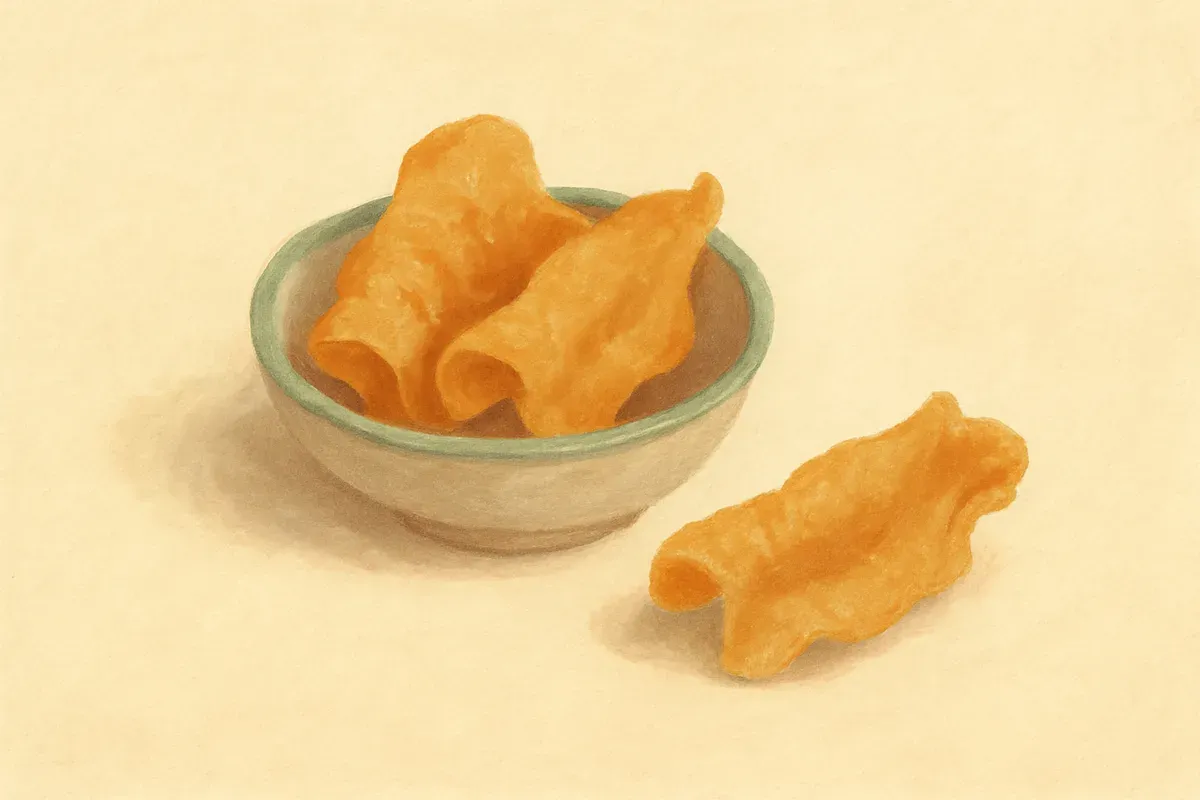
Fish maw (花胶): the collagen-rich postpartum tonic
hua jiao (花胶)
Fish maw, hua jiao, is the prized, collagen-rich delicacy of restorative postpartum soups. Why the tradition reaches for it after birth, and how to prepare it.
If snow fungus is the everyday collagen dessert, fish maw is its grand, special-occasion cousin. One of the great delicacies of Chinese tonic cooking, it has long been among the first things a family will prepare for a new mother, and it sits near the top of the confinement kitchen’s list of restorative ingredients.
Why replenish and heal
Fish maw is rich in collagen and protein, and in TCM it is used to nourish and replenish, with a particular reputation for the skin and for healing. Birth is understood to leave the body depleted, and the month is built around rebuilding it; a dense, nourishing ingredient like fish maw is the tradition’s answer at the richer end of that project, well suited to the later, rebuilding weeks rather than the delicate first days.
A luxury tonic soup
Fish maw belongs to the special soups. It is often double-boiled slowly with chicken, dang gui, red dates and dried scallops into a deep, restorative tonic, the kind of soup made to mark and support a new mother rather than an everyday bowl. Mild in itself, it lends the finished dish a silky richness and drinks in the flavours around it.
The plant-based alternatives
Because fish maw is expensive, and because it is a seafood, many families reach instead for the plant-world routes to a similar silky, collagen-like texture: snow fungus and peach gum. They are the sensible everyday substitutes, and the vegetarian ones, for anyone who wants the nourishing texture without the price or the fish.
Preparing and buying it
Fish maw needs an overnight soak, then a brief blanch with ginger and spring onion to take away any fishiness, before it goes into a soup. It is sold dried in many grades and thicknesses, and it is genuinely costly, so it is worth buying from a trusted Chinese grocer or medicine shop and keeping it, airtight and dry, for the soups that warrant it.
Sources
- The Zuo Yuezi Guide
- Zuo Yuezi: An American Mother's Guide to Chinese Postpartum Recovery (Guang Ming Whitley)
Common questions
What is fish maw?
It is the dried swim bladder, the air bladder, of certain fish. Prized for its high collagen content and gelatinous texture, it has been a delicacy in Chinese tonic cooking for centuries, and one of the ingredients most associated with postpartum and convalescent soups.
Why is fish maw eaten after birth?
It is rich in collagen and protein, and the tradition treats it as a replenishing, rebuilding food, valued for the skin and for healing at a time when the body is understood to be depleted. That is why it appears in the restorative soups families make for a new mother.
How do I prepare it?
Soak the dried fish maw overnight until soft, then blanch it briefly in boiling water with a few slices of ginger and some spring onion to remove any fishiness. After that it is ready to double-boil or simmer into a tonic soup, where it softens further and drinks in the flavour.