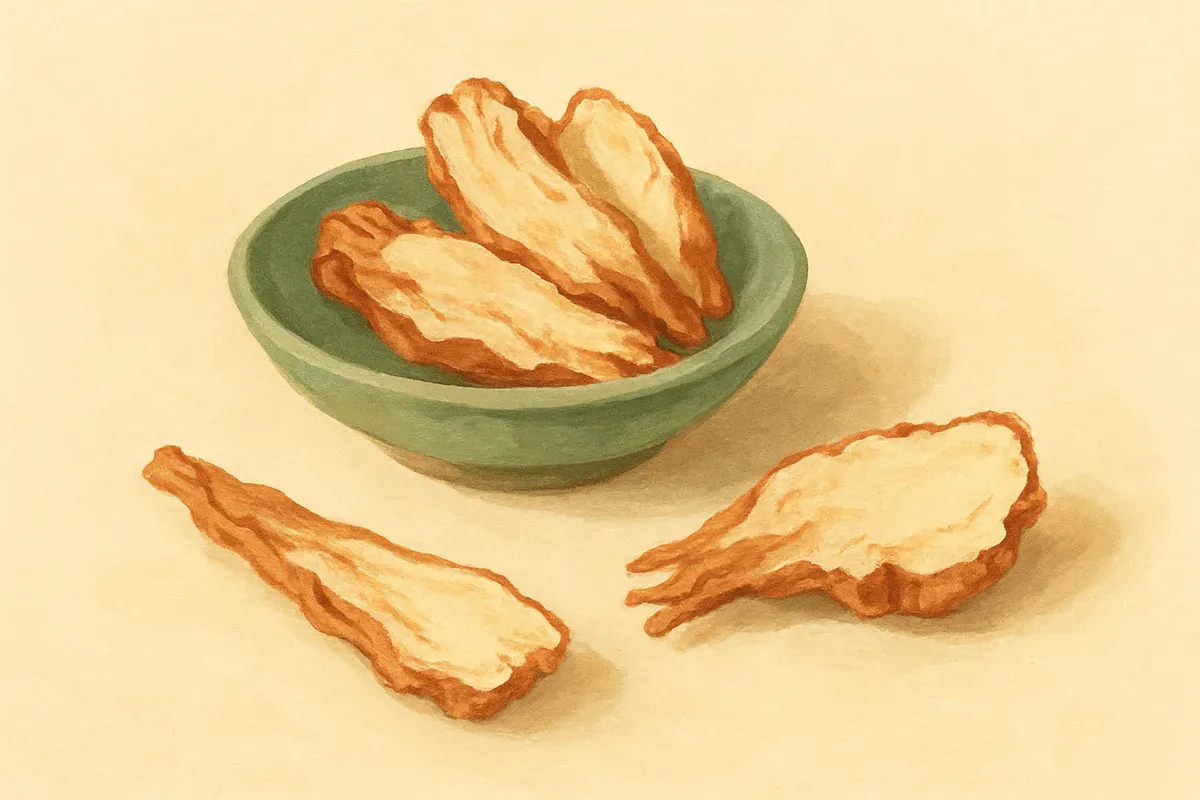
Chinese angelica (当归): the blood herb, used with care
dang gui (当归)
Dang gui is the most used blood tonic in Chinese medicine. Its role in confinement, why it waits until bleeding settles, and why a little goes a long way.
Dang gui is where the confinement kitchen shades from cooking into herbal medicine. It is the most used blood tonic in Chinese medicine, and it carries a real potency that sets it apart from the everyday warming ingredients like ginger and red dates. It rewards being understood before it is used.
Why it matters
The confinement month is, in the traditional frame, largely about rebuilding blood, and dang gui is the herb most associated with doing exactly that. TCM describes it as both nourishing and moving blood, a combination that makes it central to postpartum recovery, where the tradition wants to replenish what birth spent while clearing any stasis left behind. It appears so often in women’s formulas that it is sometimes called female ginseng.
Used with care
Two things make dang gui different from the other ingredients in this section.
First, timing. Because it is understood to move blood, the tradition holds it back while bleeding is still heavy, and brings it in during the second stage of the month once lochia has settled. Sheng hua tang, a first week brew, is the exception the tradition makes deliberately and in a controlled form.
Second, dose. Dang gui is potent and strongly flavoured, sweet and medicinal. Two or three thin slices is enough to carry a dish of ribs or a soup. The most common home mistake is using so much that the food tastes like a herbal decoction. Red dates are its usual partner precisely because they soften that medicinal edge.
Buying it
Buy dang gui from a Chinese herbalist or medical hall, and ask for thin slices rather than a whole root, which is hard to portion at home. Quality varies, and a herbalist will sell you the culinary grade.
Because it is a potent herb rather than a food, it is worth a word with a TCM practitioner or your pharmacist if you are unsure whether it suits you, particularly if you take other medicines.
Dang gui is the defining herb in angelica and red date steamed pork ribs. For the framework of blood and qi it belongs to, see qi, blood, cold and wind.
Common questions
What is dang gui used for?
In TCM it is said to both nourish and move blood, which is why it is central to womens formulas and to postpartum recovery, where the tradition sees blood as depleted and stasis as something to clear. It is sometimes called female ginseng for how often it appears in these contexts.
When in the month can I use it?
Most households wait until the second stage, roughly after the first ten days, once lochia has lightened. Because dang gui is understood to move blood, it is traditionally avoided while bleeding is still heavy.
How much should I use?
Very little. Two or three thin slices flavours a whole dish of ribs or a pot of soup. It is strong and distinctly medicinal, and using more does not make a dish more nourishing, only more like a decoction that is hard to finish.
Is it safe for everyone?
It is a potent herb rather than an everyday food. It may not suit you if you take blood thinning medicines or have certain conditions, so it is worth checking with a TCM practitioner or your pharmacist before using it, particularly in the early weeks.