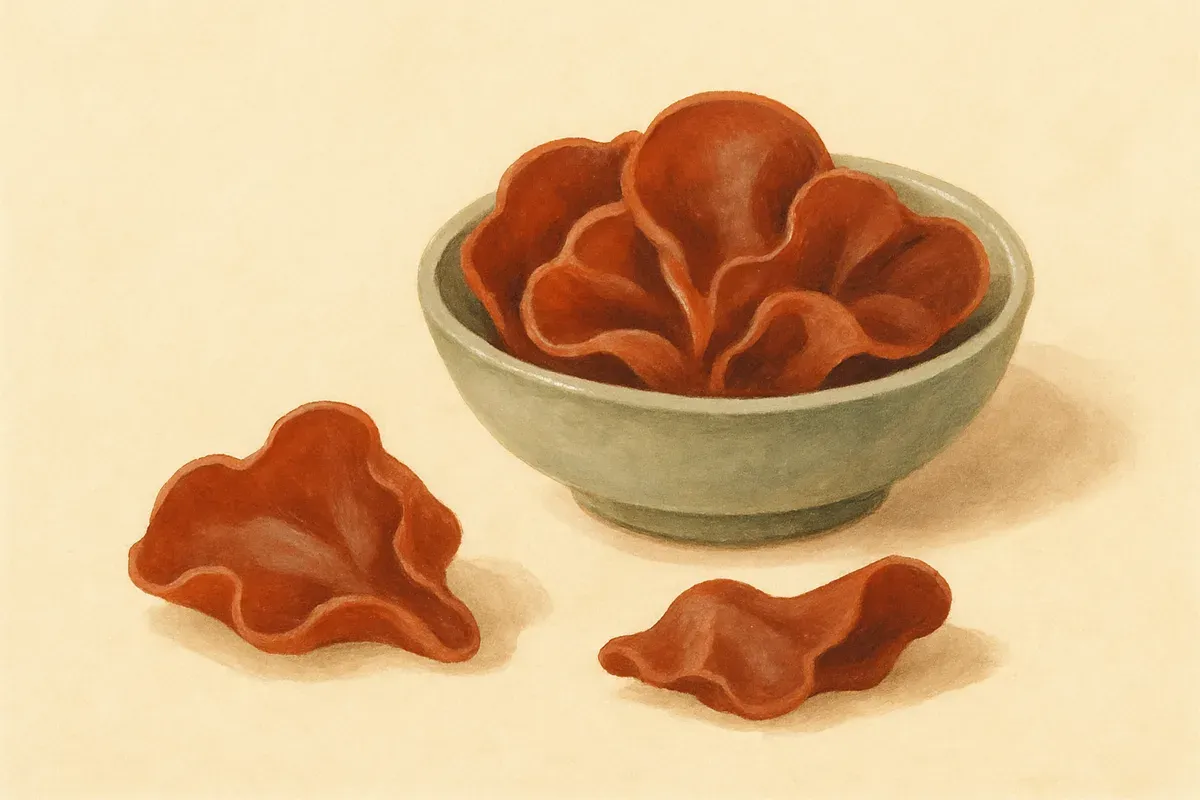
Wood ear (黑木耳): the blood-nourishing black fungus
hei mu er (黑木耳)
Wood ear, hei mu er, is the crunchy black fungus of confinement stir-fries and soups. Why the tradition ties it to blood, its iron, and how to soak and cook it.
For all the confinement kitchen’s focus on soft, warm and easily eaten food, it still wants a little texture, and wood ear is where much of it comes from. Dark, crinkled and crunchy, this humble fungus turns up in stir-fries and soups across the month, and it is there for more than the bite.
Why blood
In TCM, wood ear is valued to nourish and invigorate blood, and that places it right at the heart of what the month is about. Birth spends blood, the tradition sets out to rebuild it, and the same concern runs through red dates, dang gui and the whole qi, blood, cold and wind framework. Wood ear adds a modern footnote the others share: it is genuinely rich in iron, so the old instinct to reach for it after blood loss lines up neatly with the nutrition.
Texture and role
Wood ear is prized for a springy, crunchy bite that survives cooking, and for a flavour mild enough to slip into almost anything. It brightens a plate of warm greens, as in green beans with wood ear, rounds out a soup, and is a classic partner to liver in the iron-rich dishes the tradition favours early, close cousin to sesame oil pork liver. It sits comfortably throughout the confinement recipes.
In the kitchen
The one thing to know is how much it grows. A small handful of dried wood ear swells several times over in water, so a little goes a long way. Soak it for fifteen to twenty minutes until soft and open, trim away any hard knots where it was attached, and it is ready to stir-fry or drop into a soup near the end. Choose pieces that are whole and dark, and keep them airtight and dry, where they last almost indefinitely.
Sources
- The Zuo Yuezi Guide
- Zuo Yuezi: An American Mother's Guide to Chinese Postpartum Recovery (Guang Ming Whitley)
Common questions
What is wood ear, or black fungus?
It is a dark, ear-shaped edible fungus, sold dried in small crinkled pieces. Soaked, it swells into soft, slightly crunchy strips with a very mild flavour, which is why it takes on whatever it is cooked with, from a savoury stir-fry to a sweet soup.
Why is it used in confinement cooking?
The tradition ties it to blood, both nourishing it and keeping it moving, which fits the month's central focus on rebuilding the blood that birth has spent. It is also a genuinely iron-rich food, so the old instinct and the modern nutrition point the same way. The crunch it adds is a welcome bonus.
Are there any cautions?
Because it is said to invigorate blood, some prefer to keep it modest in the very first days when bleeding is heaviest, and lean on it more as the weeks go on. In ordinary culinary amounts it is a common food. If you take a blood-thinning medicine, mention it to your pharmacist.