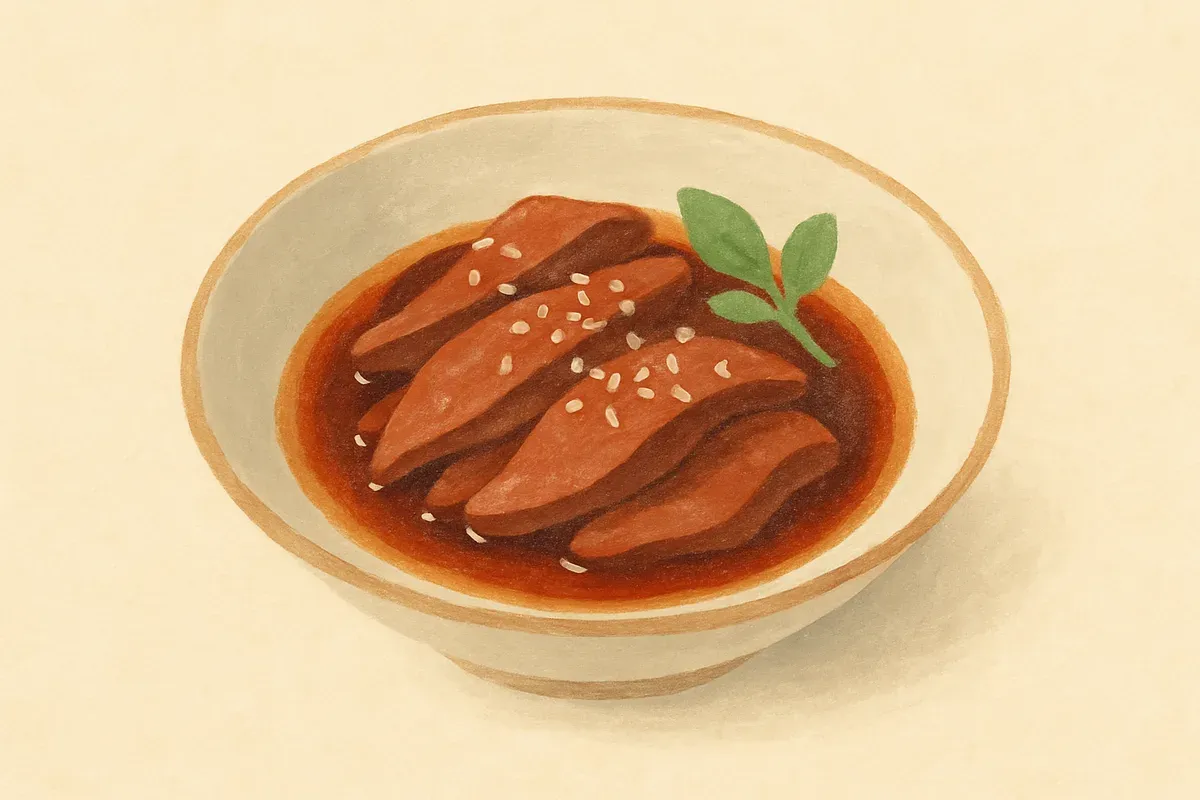
Sesame oil pork liver (麻油猪肝)
ma you zhu gan (麻油猪肝)
A classic blood nourishing confinement dish: pork liver flashed in black sesame oil and old ginger. Quick to cook, and eaten early in the month by tradition.
Sesame oil pork liver is one of the older confinement dishes, and one built around a single idea: after the blood loss of birth, the tradition reaches for the most blood nourishing food it knows. It cooks in minutes and belongs to the earlier part of the month.
Why this dish
The reasoning is the old principle of nourishing like with like: to help the body rebuild its blood, the tradition turns to liver, the organ it most associates with blood. It is eaten early, when that rebuilding is the priority. The modern footnote is simple, liver is exceptionally rich in iron, so the instinct holds up well.
Cook it hot and fast
There is only one thing to get right, and it is timing. Liver is tender for a minute or two and rubbery a moment later. Slice it thin, get the wok hot, and pull the liver the instant it has changed colour through. Everything else, the ginger, the black sesame oil, the splash of wine, is the familiar confinement base.
For the ideas behind blood and recovery, see qi, blood, cold and wind.
The recipe
- Prep
- 15 min
- Cook
- 8 min
- Total
- 23 min
- Serves
- 2 as part of a meal
Why this ingredient
Pork liver (猪肝)
Liver is one of the classic blood nourishing foods of the confinement kitchen, following the traditional idea of using an organ associated with blood to help the body replenish its own after birth. It is typically eaten in the earlier part of the month, and its high iron content is a plain modern reason the tradition’s instinct here lines up with recovery.
Why this ingredient
Black sesame oil (黑麻油)
Pressed from toasted black sesame and classed as warm and nourishing, black sesame oil is the fat almost every confinement dish is cooked in. Here it both warms the dish and carries the ginger, and the tradition treats it as food and remedy in one. Use the dark toasted kind, not the pale supermarket oil.
Ingredients
- 250 g fresh pork liver, sliced thinly Buy it fresh and use it the same day. Thin, even slices cook through in seconds.
- 30 g old ginger, sliced into thin coins A generous amount, fried first to build the warming base.
- 2 tablespoons black sesame oil The defining warming fat; keep it below smoking point.
- 2 tablespoons rice wine, or water A splash to finish the sauce; use water to keep it alcohol free.
- 1 teaspoon goji berries (optional) For colour and a little sweetness at the end.
- A little salt, to taste
Method
- 1 Rinse the liver, pat it very dry and slice it thinly and evenly. Even slices are what let it cook through fast without toughening.
- 2 Heat the black sesame oil in a wok over medium heat, keeping it below smoking point, and fry the ginger for 4 to 5 minutes until the edges curl.
- 3 Turn the heat to high. Add the liver and stir fry for just 1 to 2 minutes, until it has changed colour all over and is only just cooked through. Do not overcook it; a few seconds too long and it turns rubbery.
- 4 Pour in the rice wine or water, add the goji and a little salt, toss for 30 seconds to make a light sauce, and serve immediately.
Notes and substitutions
- Have everything ready before you start, because the cooking takes barely two minutes from the moment the liver hits the pan.
- Soaking the sliced liver in a little water or milk for 10 minutes and patting it dry can soften any strong flavour.
- Serve it hot over rice, or with mee sua noodles to soak up the sesame sauce.
Before you cook this
- Liver is very high in vitamin A. It is valued in confinement but usually eaten in modest portions and not every day.
- Buy liver fresh and cook it through until no longer pink inside, while still keeping it brief so it stays tender.
- If made with rice wine, note that alcohol passes into breast milk; use water instead to avoid it.
Common questions
Why is liver eaten during confinement?
It is considered one of the most blood nourishing foods available, following the traditional idea of nourishing blood with an organ associated with blood. In modern terms liver is also very rich in iron, which is relevant after the blood loss of birth, so it is usually eaten in the earlier weeks.
How do I stop the liver going tough?
Cook it hot and fast. Liver needs only a minute or two over high heat and toughens the moment it is overdone. Slice it thinly and evenly, and take it out as soon as it has just changed colour throughout.
How often should I eat it?
In modest amounts and not daily. Liver is nutrient dense and very high in vitamin A, so the tradition of eating it in small portions a few times across the early weeks is also the sensible approach.