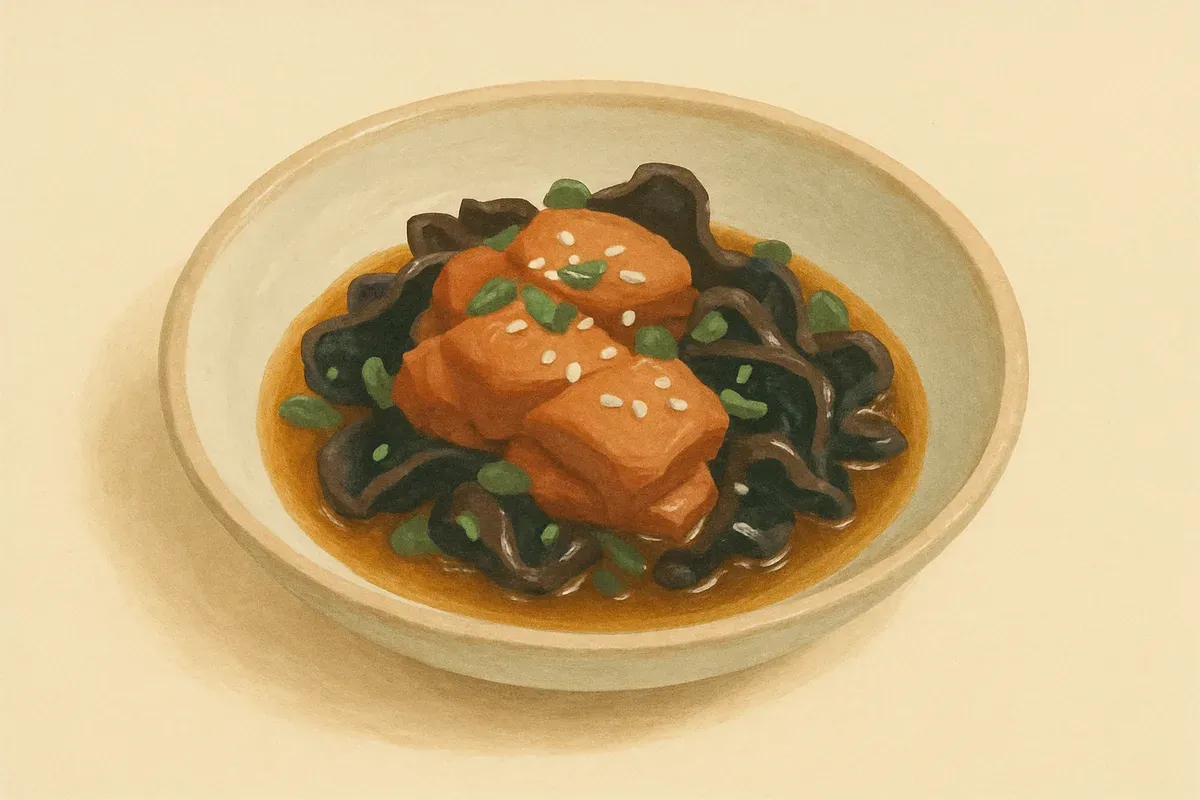
Sesame oil pork with wood ear (麻油木耳炒肉片)
ma you mu er chao rou pian (麻油木耳炒肉片)
Sliced pork stir-fried fast in black sesame oil and ginger with black wood ear. A quick, warming everyday plate for the middle and later weeks.
Not every confinement meal is a slow soup or a long braise. This quick stir-fry of sliced pork, black sesame oil, ginger and wood ear is the kind of everyday plate a household actually cooks on a busy evening, and it still keeps to the warming palette of the month.
Why this dish
Black sesame oil and a generous amount of old ginger do the work of keeping the dish warming, while black wood ear adds a food the tradition values as gently blood nourishing, alongside its crunch. It comes together in minutes, which is its real virtue in a month when time and hands are short.
Get everything ready first
Like any stir-fry, this rewards having the pork sliced, the wood ear soaked and the ginger cut before the pan goes on. Cook the pork hot and fast so it stays tender, and add the spring onion right at the end.
For lighter dishes for the early days, see the first stage of the month.
The recipe
- Prep
- 15 min
- Cook
- 10 min
- Total
- 25 min
- Serves
- 3 as part of a meal
Why this ingredient
Black wood ear (黑木耳)
A dark, ruffled fungus prized for its crunch and its glossy black colour. Confinement cooks reach for it as a gently blood nourishing food, in keeping with the tradition of favouring dark ingredients in this month. Soak it in cool water until soft and pliable, then tear away any hard nub before cooking.
Why this ingredient
Old ginger (老姜)
Old ginger is what turns an ordinary stir-fry into a warming confinement dish. Slicing it fine and cooking it briefly in the hot sesame oil first releases its warmth into the whole plate.
Ingredients
- 300 g pork loin or leg, thinly sliced A lean cut slices cleanly and cooks in a minute; slightly freezing it first makes slicing easier.
- 20 g dried black wood ear, soaked and torn It swells to several times its size, so a small amount of dried is plenty.
- 3 tablespoons black sesame oil The warming fat the ginger and pork are cooked in, and the signature flavour.
- 30 g old ginger, finely sliced A generous amount of ginger keeps the dish warming.
- 1 tablespoon light soy, and a splash of rice wine To season; keep it light so the sesame and ginger lead.
- 2 stalks spring onion, cut into lengths Added at the end for freshness.
Method
- 1 Soak the dried wood ear in cool water until soft, then rinse, trim and tear into bite-sized pieces.
- 2 Warm the black sesame oil in a wok over medium heat and fry the ginger until fragrant.
- 3 Raise the heat, add the pork and stir-fry until it turns opaque.
- 4 Add the wood ear, light soy and rice wine and toss for another minute or two until heated through.
- 5 Stir through the spring onion and serve straight away.
Notes and substitutions
- Have everything sliced and ready before you start; the whole dish cooks in a few minutes.
- Cook the pork over high heat just until it turns opaque, so it stays tender.
- Soak extra wood ear and keep it in the fridge for a few days to speed up midweek cooking.
Before you cook this
- Wood ear must be fully rehydrated and cooked through; never eat it raw or after a long spell soaking at room temperature.
- A splash of rice wine is optional; leave it out if you would rather avoid alcohol while breastfeeding.
Common questions
Can I use a different cut of pork?
Yes. Loin and leg are lean and quick, but thin slices of shoulder work too and stay a little juicier. Avoid very fatty cuts here, since this is meant to be a light, fast dish rather than a rich braise.
Is this warming enough for early confinement?
It leans warming thanks to the ginger and sesame oil, but stir-fries are generally kept for the middle and later weeks once digestion has settled. In the first days, gentler steamed and simmered dishes are usually preferred.