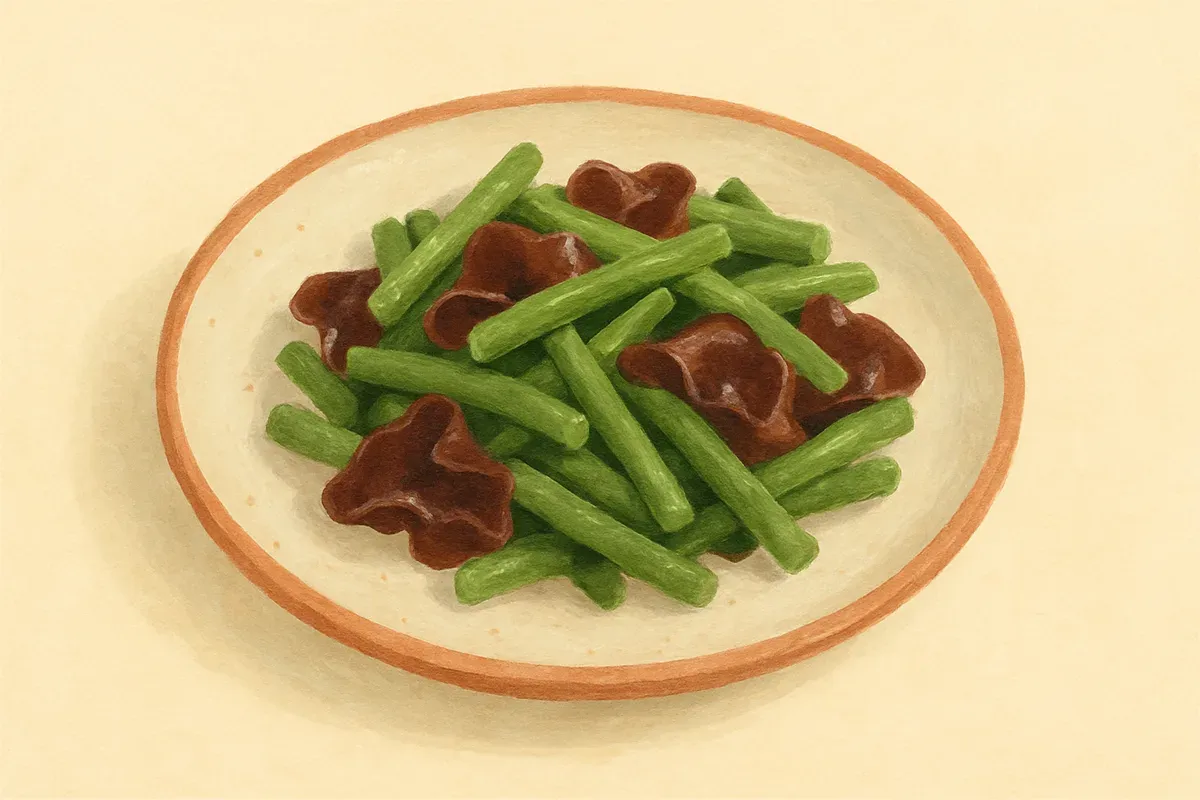
Green beans with wood ear (木耳炒四季豆)
mu er chao si ji dou (木耳炒四季豆)
Green beans and black wood ear stir-fried with ginger and garlic. A quick, crunchy vegetable dish with a blood nourishing note from the fungus.
Green beans and wood ear is a plain, quick stir-fry, and that is exactly its value: crunch, colour and fibre on a table that otherwise runs to rich braises and soups. The dark fungus adds a quiet blood nourishing note.
Why this dish
The tradition groups wood ear with the blood nourishing foods, so even a simple vegetable stir-fry can carry a little of that intent. Beyond that, its job is honest, to add texture and fibre, cooked warm with ginger so it sits comfortably within the month.
Fast is the point
This is the dish you make while something slower cooks. Blanch the beans first so the stir-fry is a matter of minutes, keep the beans with a little bite, and serve it warm. It asks almost nothing of you.
For the tradition’s approach to vegetables, see should I avoid cold food and cold drinks.
The recipe
- Prep
- 10 min
- Cook
- 8 min
- Total
- 18 min
- Serves
- 3 as part of a meal
Why this ingredient
Black wood ear (黑木耳)
Wood ear, a dark, gently crunchy fungus, is grouped in the tradition with the blood nourishing foods and is thought to help move the blood. It has little flavour of its own but a springy texture that lifts a simple vegetable dish, and its dark colour is part of why it recurs so often in confinement cooking. Soaked from dried, a small handful swells to a generous amount.
Ingredients
- 250 g green beans, trimmed and cut into lengths Choose firm, snappy beans for the best crunch.
- 15 g dried black wood ear, soaked until soft Swells to several times its size; rinse and tear into pieces.
- 15 g ginger, cut into matchsticks For warmth, as the tradition wants with vegetables.
- 2 cloves garlic, sliced For fragrance.
- 1 tablespoon sesame oil or neutral oil Sesame oil suits the confinement palette.
- 1 teaspoon oyster sauce and a splash of water A light seasoning; the water steams the beans tender.
Method
- 1 Soak the wood ear in warm water until soft and swollen, then rinse well and tear into bite-sized pieces.
- 2 Blanch the green beans in boiling water for 2 minutes, then drain. This keeps the final stir-fry quick and the colour bright.
- 3 Heat the oil in a wok and fry the ginger and garlic for a minute until fragrant.
- 4 Add the beans and wood ear and stir-fry for 2 to 3 minutes, adding the oyster sauce and a splash of water to steam them tender.
- 5 Toss until glossy and the beans are just tender with a little bite. Serve warm.
Notes and substitutions
- Soak a batch of wood ear ahead; it keeps a couple of days in the fridge and is handy to add to stir-fries and braises.
- Do not overcook the beans; a little crunch is part of the appeal.
- Snake beans or snow peas can stand in for green beans with the same treatment.
Before you cook this
- A light, everyday vegetable dish. Serving it warm and cooked with ginger keeps it in line with the tradition.
Common questions
What is wood ear and where do I find it?
Wood ear is a dark, crunchy edible fungus, sold dried in bags at Chinese grocers. It is soaked in warm water before use, swelling to several times its size, and is valued in the tradition as a blood nourishing food as well as for its springy texture.
Do I need to blanch the green beans?
It helps. A quick blanch means the final stir-fry is fast, so the ginger and garlic stay fragrant rather than burning, and it ensures the beans are properly cooked, which the tradition prefers to raw or barely-cooked vegetables.
Is this dish warming or cooling?
Cooking the vegetables warm and with ginger keeps the dish on the warm side, which is what the month favours. Ginger is the key: it is what allows the confinement kitchen to serve a range of vegetables without them feeling cold.