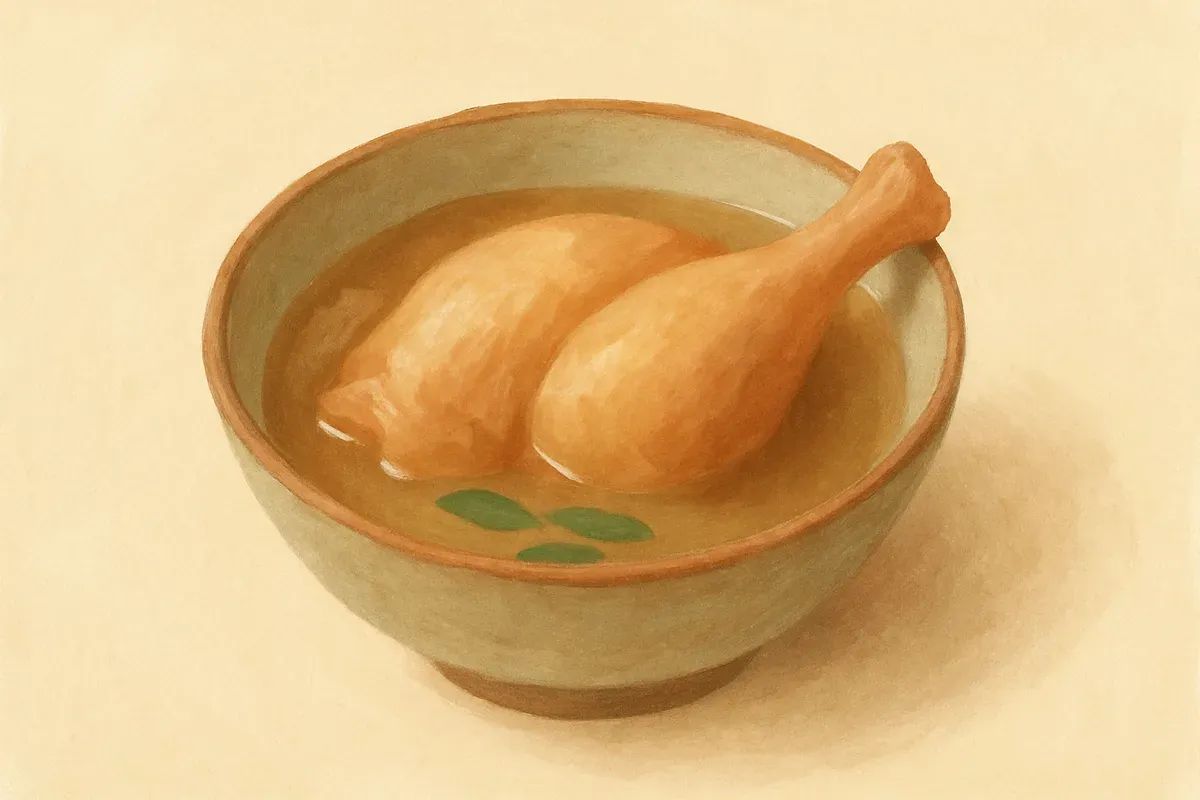
Chicken in rice wine (鸡酒)
ji jiu (鸡酒)
The Cantonese confinement staple: chicken simmered with old ginger, wood ear and glutinous rice wine. Deeply warming, and a dish for the later weeks.
Where Taiwanese kitchens have sesame oil chicken, Cantonese and Hakka ones have chicken wine, known plainly as ji jiu. Chicken, a great deal of old ginger and sweet glutinous rice wine, simmered together into one of the most warming dishes of the month.
Why this dish
Almost everything in it is warming: the wine, the sesame oil and the ginger, all three at once and by design. The black fungus adds a blood nourishing note. In the traditional view this is deeply restorative food for the rebuilding weeks, which is exactly why it is held back from the delicate early days.
The wine question
The rice wine is the heart of the dish and also the thing to weigh while breastfeeding. Alcohol passes into milk and simmering does not reliably remove it, so many families halve the wine with water, leave it out, or time it away from a feed. The dish is still good made gentler.
For where the richest dishes sit in the month, see how the 30 days are structured, and for the blood-nourishing fungus in the pot, see wood ear.
The recipe
- Prep
- 15 min
- Cook
- 40 min
- Total
- 55 min
- Serves
- 4 as part of a meal
Why this ingredient
Glutinous rice wine (糯米酒)
Sweet glutinous rice wine is the backbone of this dish and one of the most warming ingredients in the confinement kitchen. The tradition holds it invigorates the blood and warms the body, and it is what gives chicken wine its name and character. It is also the reason the dish sits in the later weeks and the point to weigh carefully while breastfeeding.
Why this ingredient
Black fungus (黑木耳)
Black fungus, or wood ear, is a dark, gently crunchy mushroom the tradition associates with nourishing and moving the blood. It carries almost no flavour of its own but soaks up the sauce, and its dark colour is part of why it is grouped with the blood nourishing foods that recur through the month.
Ingredients
- 1 kg chicken pieces on the bone, chopped Bone-in thigh and drumstick for a richer result that holds up to simmering.
- 80 g old ginger, sliced into coins A large amount, as the tradition wants for a warming wine dish.
- 2 tablespoons black sesame oil The warming fat the ginger is fried in first.
- 20 g dried black fungus (wood ear), soaked until soft Swells to several times its size. Valued as blood nourishing.
- 400 ml glutinous rice wine, or half wine and half water The defining ingredient. Halve it with water for a gentler dish.
- Salt, to taste Added at the end; the wine already carries depth.
Method
- 1 Soak the black fungus in warm water until soft and swollen, then rinse and tear into bite-sized pieces.
- 2 Heat the black sesame oil in a heavy pot over medium heat, keeping it below smoking, and fry the ginger for 5 to 8 minutes until the edges curl.
- 3 Turn up the heat, add the chicken, and stir fry for 5 minutes until coloured all over.
- 4 Add the black fungus, then pour in the rice wine. Bring to the boil and let it bubble for 2 minutes.
- 5 Lower to a simmer, cover, and cook for 25 to 30 minutes until the chicken is tender and the sauce has reduced a little.
- 6 Season with salt and serve hot, traditionally over rice or thin mee sua noodles.
Notes and substitutions
- Glutinous rice wine is sold at Chinese grocers, sometimes as the sweet, cloudy homemade style. It is sweeter and gentler than Shaoxing.
- The dish reheats well and the flavour deepens overnight, so it suits batch cooking and freezing.
- Keep the sesame oil at medium heat so it does not smoke and turn bitter.
Before you cook this
- The traditional dish is heavy on rice wine, and the alcohol is central to it. Alcohol passes into breast milk, and simmering reduces but does not reliably remove it, so many families use half water or leave it out. Timing feeds away from a serving is another common approach.
- Strongly warming, so it is usually reserved for the later weeks and eaten in modest portions.
Common questions
How is chicken wine different from sesame oil chicken?
They are close cousins. Sesame oil chicken (ma you ji) is the Taiwanese version and leans on black sesame oil; chicken wine (ji jiu) is the Cantonese and Hakka version and leans on glutinous rice wine and black fungus. Both use a great deal of old ginger and both belong to the later weeks.
Can I make it without alcohol?
You can replace the rice wine with water or a light stock and add a splash more sesame oil for aroma. It will be milder and lose the wine character that gives the dish its name, but it removes the alcohol question entirely.
When should I eat it?
The later weeks. Between the wine, the sesame oil and the mountain of ginger it is one of the most warming dishes of the month, which the tradition considers too much for the delicate early days.