Codonopsis (党参): the gentle everyday qi tonic
dang shen (党参)
Dang shen, or codonopsis, is the mild, food-like qi tonic that flavours everyday confinement soups. A gentler stand-in for ginseng, and how to use it.
If astragalus is the confinement kitchen’s workhorse qi tonic, dang shen is its gentler cousin, the one that goes into the pot day after day without a second thought. Often described as the everyday stand-in for ginseng, it is mild enough to be treated as food rather than medicine, which is precisely why it is so widely used through the month.
Why the gentle tonic
In TCM, dang shen is used to tonify qi and, above all, to support the spleen and stomach, the pair the tradition treats as the engine of digestion and the base from which the body rebuilds. After birth, when appetite is small and energy is low, a tonic that strengthens digestion without overwhelming it is exactly what the month wants. It does for qi, quietly and gradually, what dang gui does for blood, and the two ideas together are the heart of qi, blood, cold and wind.
Gentle enough for every day
The whole appeal of dang shen is its mildness. Stronger tonics like true ginseng can be too warming or too much for daily use, especially early on, whereas dang shen is soft enough to simmer into an ordinary soup through the rebuilding weeks. For where those weeks sit in the month, see how the 30 days are structured.
In the kitchen
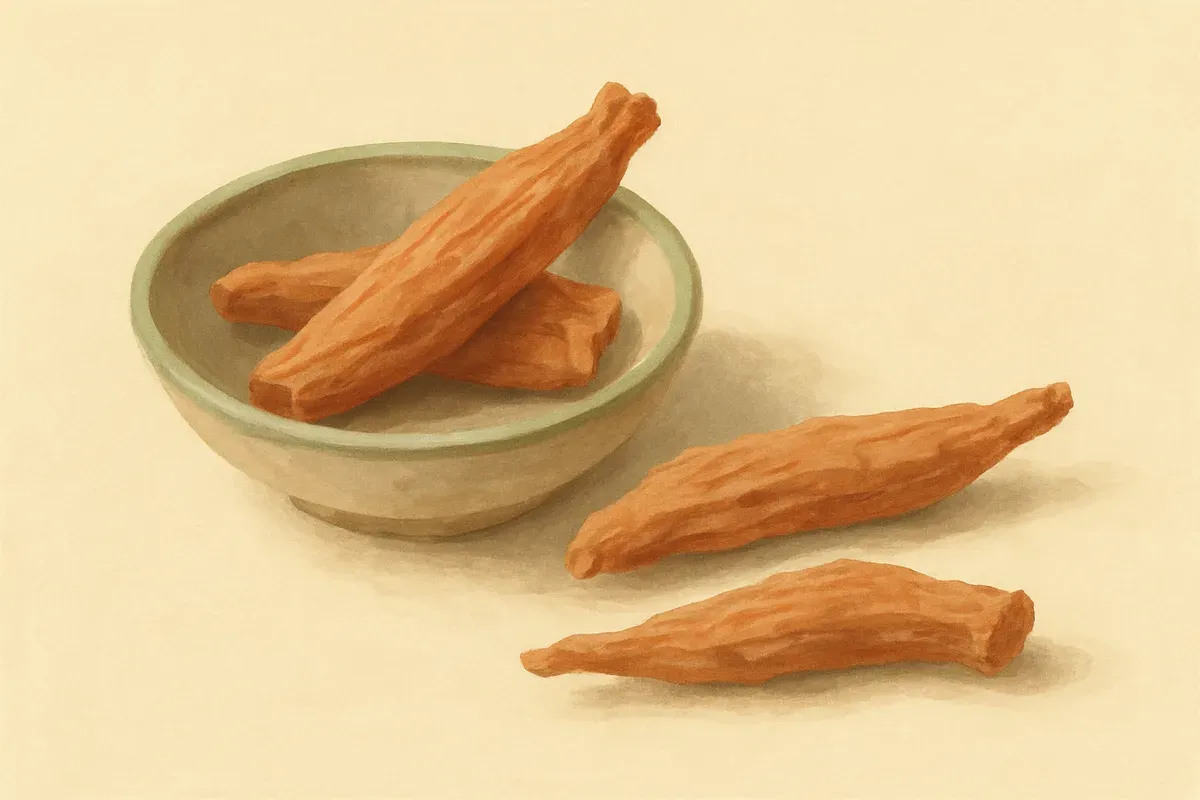
Dang shen comes as long, thin, pale roots. They are simmered into chicken and pork soups, often for an hour or more, and unlike astragalus they soften enough to eat, with a mild, slightly sweet flavour. They pair naturally with red dates, goji and astragalus in the standard tonic pot. Choose roots that are pale, pliable and sweet-smelling rather than dark or musty, and store them airtight and dry.
A note of care
Dang shen is among the gentlest of the tonic herbs, which is why it is trusted for regular postpartum use, but it is still a tonic. In soup amounts it is an ordinary food; for concentrated doses, or if you have a health condition or take medication, a quick word with a qualified Chinese medicine practitioner is the sensible step.
Sources
- The Zuo Yuezi Guide
- Zuo Yuezi: An American Mother's Guide to Chinese Postpartum Recovery (Guang Ming Whitley)
Common questions
What is the difference between dang shen and ginseng?
Dang shen is milder and cheaper, and is treated more as a food than a strong medicine, which is why it turns up in everyday confinement soups. True ginseng is a more powerful and warming tonic used more sparingly. Many families reach for dang shen for regular cooking and keep ginseng for a stronger, occasional boost.
Can I eat the roots or just the broth?
Both. Unlike woody astragalus, dang shen roots soften with long simmering and are mild and pleasant to eat, so many people eat them along with the soup. If they stay fibrous, simply leave them and drink the broth.
Is it safe to use often postpartum?
Its mildness is exactly why it is favoured for regular use, and in soup amounts it is treated as an ordinary tonic food. As with any tonic herb, if you are using concentrated doses, have a health condition or are unsure, it is worth checking with a qualified practitioner.