Batch cooking and freezer prep for confinement
Cooking ahead is the single best way to protect the first week. What confinement food freezes well, how much to make, and how to reheat it warm.
If you do one thing to prepare, fill the freezer. Cooking ahead in the last weeks of pregnancy means the hardest first days, when appetite, energy and help are all scarce, need no cooking at all. It is the highest-value preparation there is, and it happens to preserve exactly the warming, nourishing food the tradition wants you eating.
A plan that actually fits in two sessions
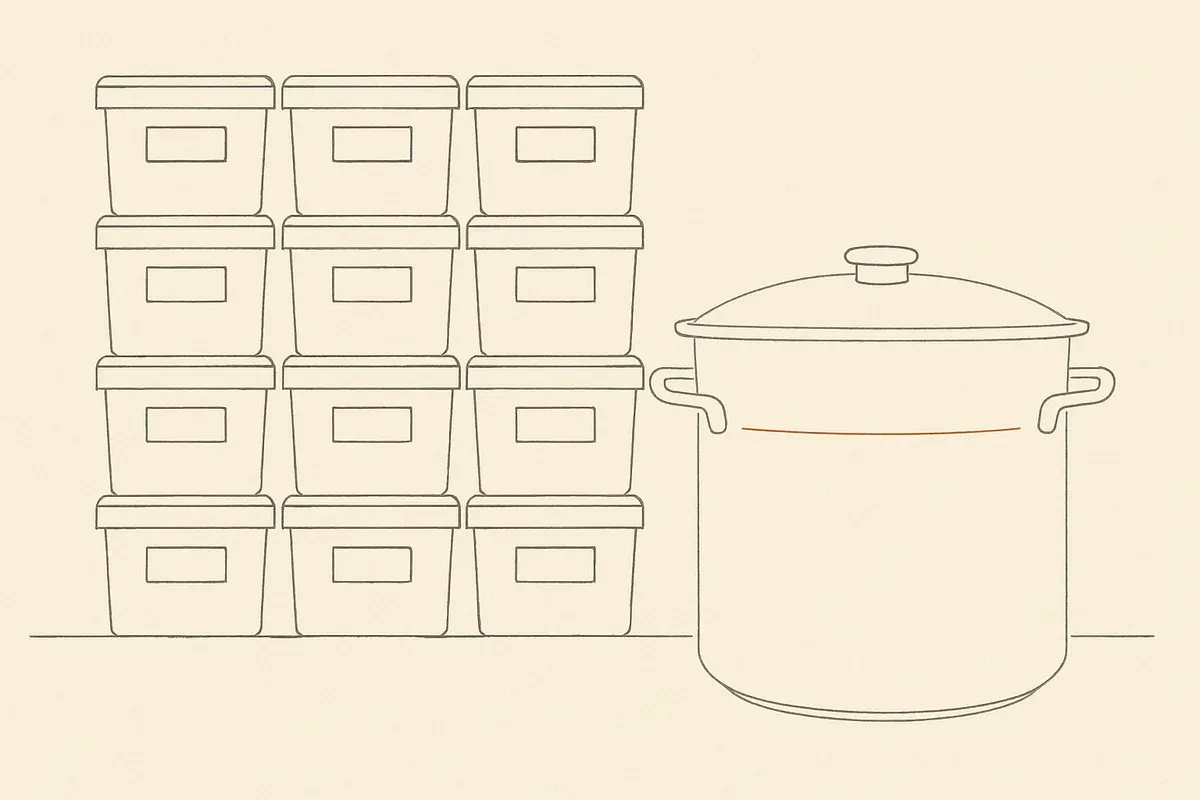
You do not need to freeze the whole month. Twelve to sixteen single portions covers the first fortnight, which is the stretch when nobody has the energy to cook. Split across two weekend sessions from about week 34, that is very manageable.
Session one, the soups and braises
| Dish | Portions | Why it earns freezer space |
|---|---|---|
| Sesame oil chicken | 3 to 4 | The signature dish, and it deepens with a rest |
| Black chicken herbal soup | 3 to 4 | The rebuilding tonic, tedious to make when tired |
| Chinese yam and pork rib soup | 3 to 4 | Gentle enough for the very first days |
| Peanut and pork trotter braise | 2 to 3 | Long cook, big payoff |
Session two, the quick wins
| Dish | Portions | Notes |
|---|---|---|
| Red date and goji tea | 6 to 8 | Freeze as a strong concentrate in small tubs |
| Brown sugar ginger tea | 6 to 8 | Same method, the first-week drink |
| Millet congee | 2 to 3 | A safety net for the days appetite is small |
| Ginger, peeled and sliced | 2 to 3 tubs | Freeze flat so you can snap off what you need |
For what to eat when, see the 30-day meal plan; the freezer covers stage one and the start of stage two.
What freezes well, and what does not
| Freezes beautifully | Freezes acceptably | Make fresh instead |
|---|---|---|
| Braises and sesame oil dishes | Congee, though it is quick to make anyway | Steamed egg custard, which weeps |
| Hearty soups and stews | Rice, if cooled fast and sealed well | Stir-fried greens, which go limp |
| Tea and tonic concentrates | Cooked pork and chicken off the bone | Anything crisp, such as wood ear stir-fries |
| Meat sauces and minced pork dishes | Sweet soups, texture softens slightly | Delicate steamed fish |
The rule of thumb: the slower a dish was cooked, the better it freezes. The quick dishes are the ones you can manage in ten minutes later anyway.
Containers, labels and stacking
Small operational things that make the difference between a freezer you use and one you avoid.
- Portion singly. One meal per container, so nobody thaws more than they need
- Leave headspace. Liquids expand; a couple of centimetres stops lids popping
- Freeze flat in bags where you can, then stand them upright like files. It doubles what fits and halves the thawing time
- Label everything with the dish and the date. In week two, an unlabelled tub of brown sauce is a mystery nobody solves
- Keep a list on the freezer door and cross things off, so whoever is cooking can see what is left without excavating
Freeze, thaw and reheat safely
Cooking ahead only helps if the food stays safe, so keep to the basics:
- Freeze at or below minus 18 degrees Celsius. At that temperature food stays safe indefinitely, though quality is best if cooked meals are eaten within about three to four months.
- Cool before freezing, but not slowly on the bench. Cool quickly, in shallow containers, then freeze.
- Thaw safely, never on the bench. Thaw in the fridge (allow a day for a large portion), under cold running water if you will cook it soon, or in the microwave if you are heating it straight away. Room-temperature thawing lets bacteria grow. Once thawed, use within about a day.
- Reheat until piping hot throughout, not just warmed at the edges, and serve warm rather than lukewarm, in keeping with the month. Add a splash of water to loosen braises, and warm tea concentrates through rather than drinking them cold.
- Do not refreeze something that has been thawed and reheated.
Why the food matters, not just that it is handy
The confinement diet is not only about convenience; the tradition built it to rebuild the body, and the nutrition holds up. Recovery and breastfeeding raise the need for protein, which supports tissue repair, and iron, to replace what birth takes, both of which the meat, egg and dark-green dishes of the month supply; pairing iron-rich food with a little vitamin C helps absorption. Hydration matters just as much while breastfeeding, since breast milk is mostly water, which is part of why the tradition keeps warm drinks and soups constantly within reach. Batch cooking these dishes banks both time and the nourishment the month is designed around.
If you have left it late
Cooking ahead is ideal, not compulsory, and there are decent fallbacks.
- Buy the dry staples anyway. They keep, and they make cooking fast later
- Order soup or meal delivery for the first fortnight; see meal delivery and soup packages
- Ask visitors to bring food rather than gifts. Our guide to what to bring a new mum is worth forwarding to them
- Cook double of whatever you make in the last fortnight and freeze the half
Useful resources
On this site
- The shopping and stocking list, what to buy before a cooking session
- A 30-day meal plan, so you freeze the right stage of food
- How to prepare for confinement
- All confinement recipes, filterable by stage and effort, including a freezer-friendly filter
Elsewhere
- Food Standards Australia New Zealand on safe freezing, thawing and reheating
- Pregnancy, Birth and Baby for postpartum nutrition questions, free on 1800 882 436
Sources
- Freezing and Food Safety , USDA Food Safety and Inspection Service
- Leftovers and Food Safety , USDA Food Safety and Inspection Service
- Postpartum 30: Thirty Days to a Nurtured Fourth Trimester (Kristal Lau, MBBS)
- The Zuo Yuezi Guide (Lee)
Common questions
What confinement dishes freeze well?
Braises and richly flavoured dishes freeze best: sesame oil chicken, pork trotter in vinegar, red-braised meats and hearty soups all reheat well and often taste better for the rest. Ginger and red date teas can be simmered into a concentrate and frozen. Congee freezes acceptably but is quick to make fresh.
How long does frozen food keep, and how do I thaw it safely?
Kept at or below minus 18 degrees Celsius (0°F), food stays safe for a long time, though most cooked meals are at their best within three to four months. Thaw in the fridge, in cold water, or in the microwave if cooking straight away, never at room temperature, and once thawed use within about a day. Reheat until piping hot all the way through.
How much should I cook ahead?
Enough to cover the first week or two, when appetite, energy and help are all at their lowest. A dozen or so single-serve portions across a few different dishes is a good target. You do not need to freeze the whole month; cook fresh as energy returns.