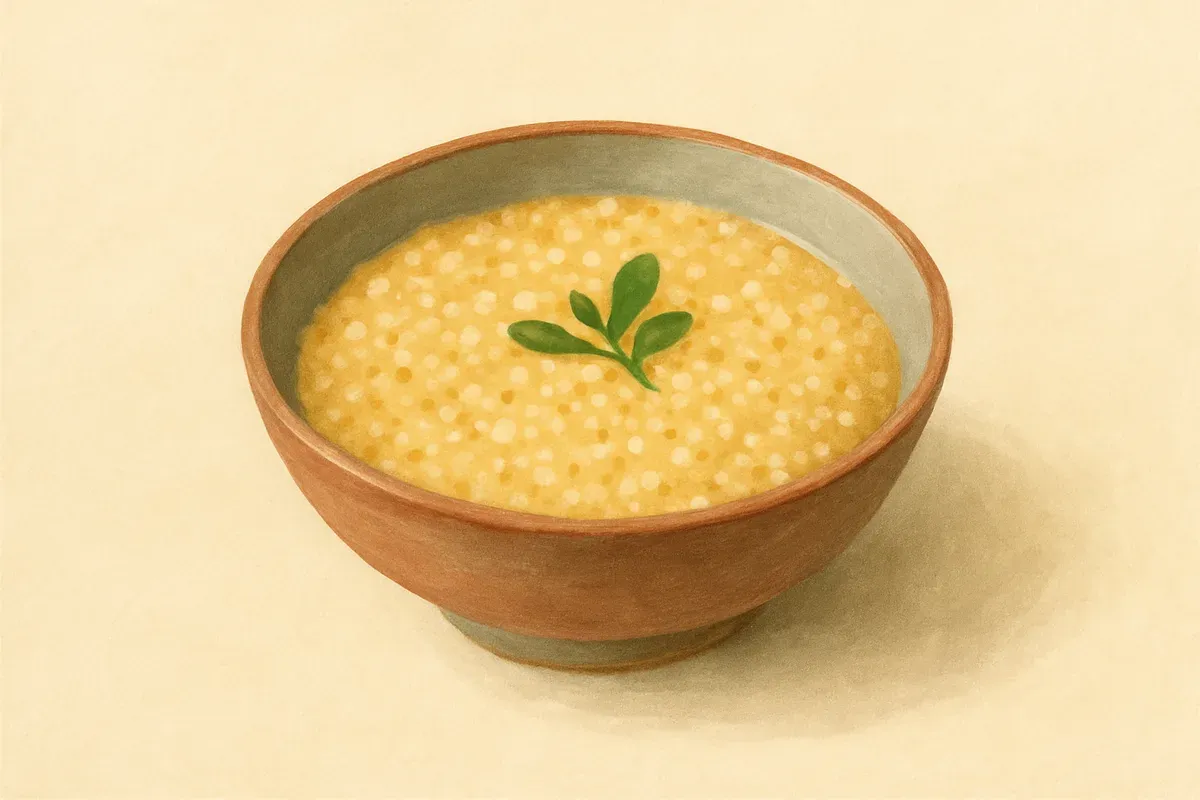
Millet congee (小米粥)
xiao mi zhou (小米粥)
The quiet staple of the confinement month: golden millet simmered soft with red dates. Warm, easy to digest and gentle on a recovering system.
Not every confinement dish is a rich, aromatic braise. Some of the most important ones are the plainest, and millet congee is the quietest staple of all, particularly in northern kitchens, where a warm bowl of it is often the very first food a new mother is given.
Why this dish
The early days are about gentleness, and little is gentler than soft millet cooked down with water. The tradition classes millet as warming and kind to the stomach and spleen, which it treats as the seat of digestion and the base from which the body rebuilds. Warm, soft and easy to take, it asks nothing of a small appetite, which is exactly why it belongs to the first week.
The golden layer
One thing worth knowing: as the congee stands, a rich golden film rises to the top. Far from skimming it off, the tradition considers it the best part and the most nourishing. Stir it back through or spoon it over the bowl.
For more on what the early days ask of you, see how the 30 days are structured. It sits well alongside other gentle first-week dishes like steamed egg custard and a warm red date and goji tea.
The recipe
- Prep
- 5 min
- Cook
- 40 min
- Total
- 45 min
- Serves
- 3 to 4 bowls
Why this ingredient
Millet (小米)
Millet is a foundational postpartum grain in northern China, where a bowl of millet congee is one of the first foods a new mother is given. The tradition classes it as gentle and warming to the stomach and spleen, which it treats as the engine of digestion and of rebuilding after birth, and its softness makes it easy on an appetite that is still small in the early days.
Why this ingredient
Red dates (红枣)
Red dates, or jujubes, run through the confinement kitchen as a sweet, blood nourishing addition. Simmered into congee they soften and lend a mild caramel sweetness, and the tradition values them for supporting blood and energy, which is why they turn a plain bowl of grain into something considered restorative.
Ingredients
- 150 g millet, rinsed until the water runs clear Rinsing removes surface dust and keeps the congee clean tasting.
- 1.5 litres water A high ratio of water to grain is what makes it soft and soupy rather than stiff.
- 6 red dates (jujubes), pitted Optional but traditional, adding gentle sweetness and a blood nourishing note.
- 1 tablespoon goji berries (optional) Stirred in near the end so they stay whole.
- A small piece of rock sugar, or a pinch of salt Sweet or savoury to taste; many prefer it plain to let the millet speak.
Method
- 1 Rinse the millet two or three times until the water runs clear, then drain.
- 2 Bring the water to a rolling boil in a heavy pot, add the millet and red dates, and stir once to stop it settling.
- 3 Lower to a gentle simmer and cook, stirring now and then, for 35 to 40 minutes, until the grains have burst and the congee is thick and creamy. Stirring occasionally stops it catching on the base.
- 4 Add the goji berries and sweeten with rock sugar or season with a pinch of salt in the last few minutes.
- 5 Let it sit off the heat for a few minutes; a rich golden layer will rise to the top, which is the prized part. Serve warm.
Notes and substitutions
- The congee thickens a lot as it cools, so loosen it with a little hot water when you reheat.
- It keeps for a couple of days in the fridge and reheats well, making it an easy thing to have ready.
- For a more substantial bowl, add a handful of soaked glutinous rice, or crack an egg in during the last few minutes.
Before you cook this
- This is a gentle, everyday food with no special cautions. If sweetening, keep the sugar moderate, particularly if you are watching blood sugar.
Common questions
Can I eat millet congee in the first days?
Yes. It is one of the classic first foods of the month, precisely because it is warm, soft and very easy to digest at a time when appetite is small and the richer dishes would be too much.
What is the golden layer on top?
As millet congee stands, a thin, rich, oily golden film rises to the surface. It is traditionally considered the most nourishing part and is prized rather than skimmed away, so stir it back in or spoon it over the bowl.
Millet or rice congee?
Both appear in confinement cooking. Millet congee is especially associated with the north and is valued for being gentle on the stomach and spleen; rice congee is common too. Many families eat both across the month.