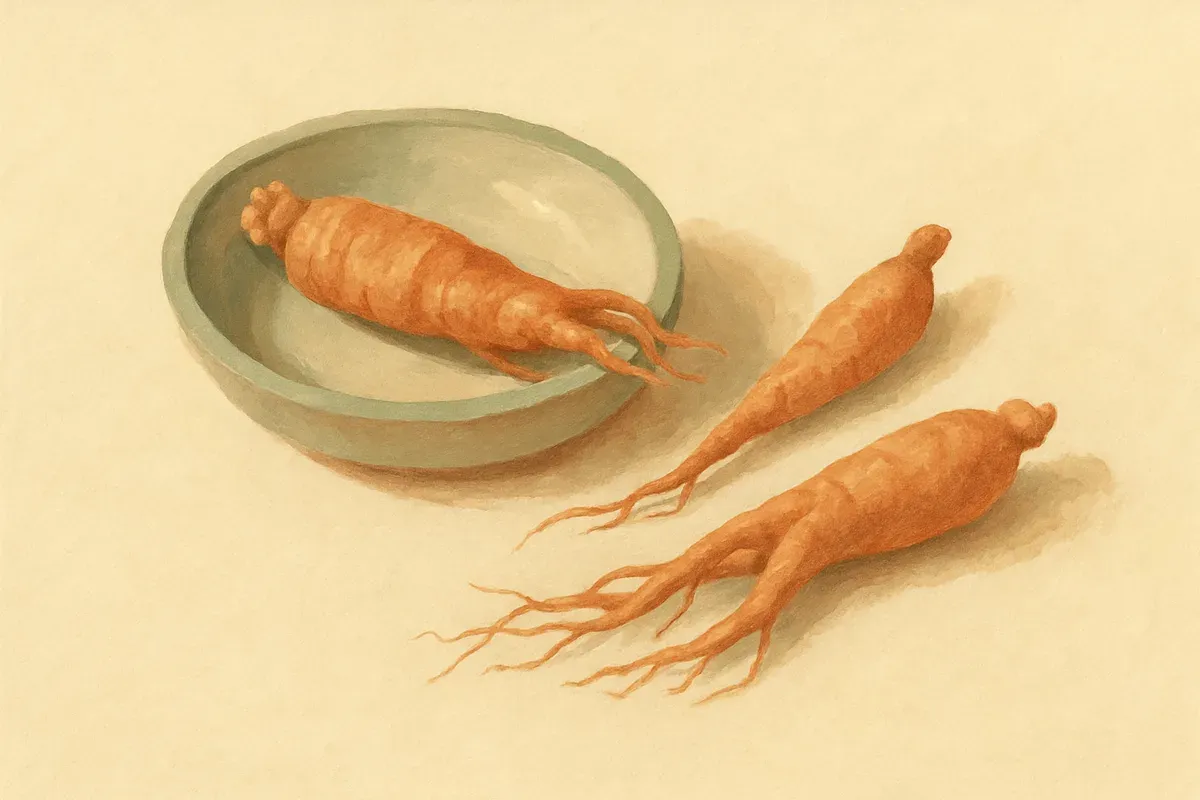
American ginseng (西洋参): the cooling qi tonic
xi yang shen (西洋参)
American ginseng, xi yang shen, is the cooling qi tonic, for the confinement mother who runs hot. How it differs from warming ginseng, and how to use it.
Ginseng is not one thing. The word covers several roots with different natures, and the difference matters a great deal in a tradition as attentive to warmth and cold as confinement is. American ginseng, xi yang shen, is the cooling one, and knowing that is what lets you use it well.
A cooling qi tonic
In TCM, American ginseng is used to tonify qi, like its warming cousins, but with two extra qualities: it nourishes yin, the body’s cooling and moistening side, and it clears heat. That makes it the odd one out in a month built almost entirely around warmth, and also the answer to a specific problem the warming month can create.
When warmth becomes too much
A confinement diet of ginger, sesame oil, wine and warming tonics can occasionally tip a mother into what the tradition calls heatiness: a dry mouth, feeling flushed or hot, broken sleep, mouth ulcers. American ginseng is one of the classic ways to cool that without abandoning the qi tonics altogether. It is also better suited to a confinement in an Australian summer, where the surrounding heat already does what the season used to. This is the more nuanced side of the tradition’s care around cold and warmth; the aim is balance, not heat at any cost.
In the kitchen
American ginseng is sold as pale, hard slices. The simplest use is a tea: steep a few slices in hot water and sip it warm. It can also go into a soup near the end of cooking, and the softened slices can be eaten. Amounts are small, a few grams, since it is a concentrated tonic rather than a bulk ingredient.
Matching the tonic to you
The single most useful thing to carry away is that the ginsengs divide into warming and cooling. If you tend to feel cold, the warming ginsengs and the qi tonics like astragalus and dang shen fit the warming logic of the month laid out in qi, blood, cold and wind. If you run hot, American ginseng is the counterweight. If you are not sure, or are on medication, a qualified Chinese medicine practitioner can match the tonic to you.
Sources
- The Zuo Yuezi Guide
- Zuo Yuezi: An American Mother's Guide to Chinese Postpartum Recovery (Guang Ming Whitley)
Common questions
What is the difference between American ginseng and Korean or red ginseng?
Temperature. American ginseng is cooling and also nourishes fluids, while Korean and red ginseng are warming. In a confinement context, the warming ginsengs suit a mother who runs cold, and American ginseng suits one who runs hot or feels dry, which is why it is worth knowing which is which.
Is American ginseng suitable during confinement if it is cooling?
With care. The month favours warmth, so a cooling tonic is not the everyday choice. It comes into its own when there are signs of heatiness, such as a dry mouth, feeling hot or restless, or in warm weather, and it is often better suited to the later weeks. If you are unsure which tonic fits you, a practitioner can match it to your constitution.
How do I take it?
Simply. A few thin slices steeped in hot water make a mild tea, or a small amount can be added to a soup near the end of cooking. Amounts are small, and the slices can be eaten once soft.