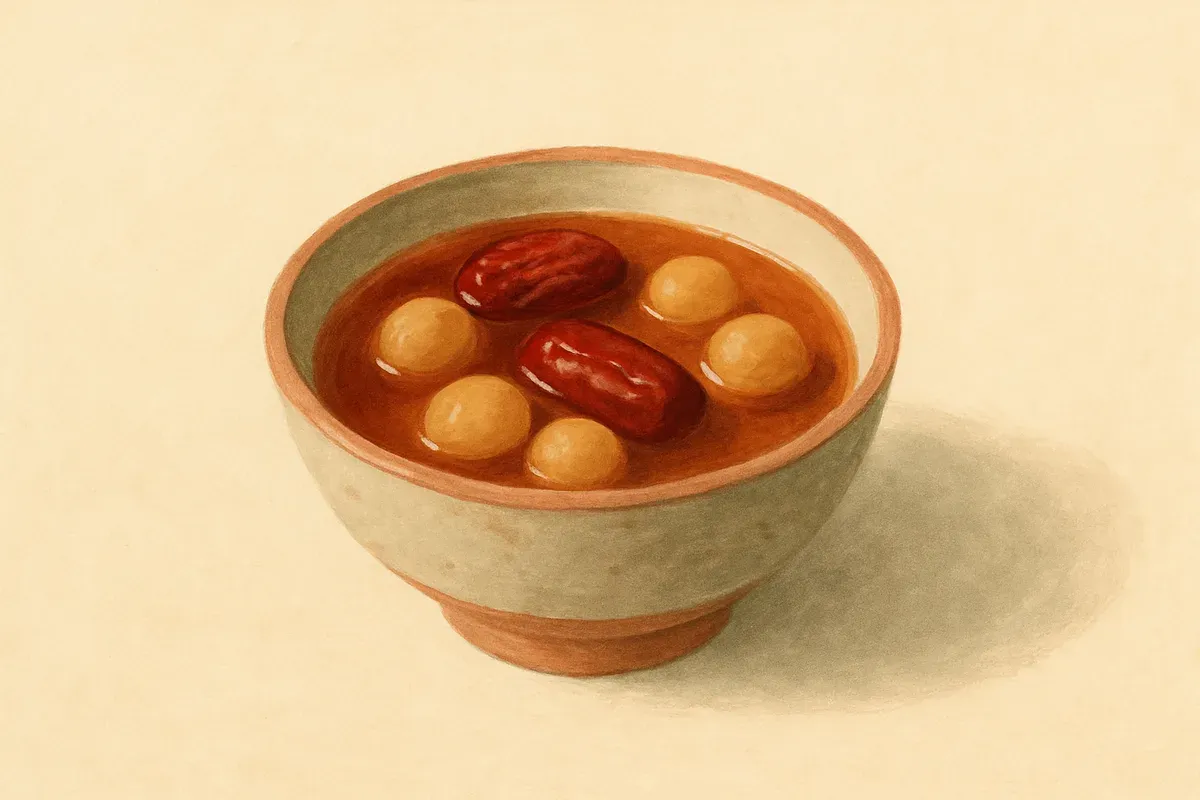
Longan and red date tea (桂圆红枣茶)
gui yuan hong zao cha (桂圆红枣茶)
A warm, naturally sweet tea of dried longan and red dates. A gentle blood nourishing drink to sip through the day in place of cold water.
Through the confinement month, the kettle is rarely off, and the cups it fills are warm and gently sweet rather than plain. A tea of dried longan and red dates is one of the most comforting of them, sweet enough to need no sugar and warming to sip.
Why this drink
Both longan and red dates are valued in the tradition as nourishing to the blood, and longan carries an added reputation for calming the mind and easing broken sleep, which makes it a fitting thing to reach for in a month of short nights. Together they make a drink that is a small tonic and a genuine pleasure at once.
Keep a pot going
The easiest way to live with it is to simmer a batch and keep it in the fridge, warming a cup whenever you want one. Do not discard the softened fruit, it is good to eat, and add a few slices of ginger in the early days if you want more warmth.
For why warm drinks are preferred, see should I avoid cold food and cold drinks.
The recipe
- Prep
- 5 min
- Cook
- 20 min
- Total
- 25 min
- Serves
- 2 to 3 cups
Why this ingredient
Dried longan (桂圆)
Dried longan is one of the sweet tonics the confinement kitchen relies on, valued in the tradition as warming and as nourishing to the blood and calming to the mind, so it is often reached for when sleep is broken and energy is low. Its dark, honeyed sweetness means a drink made with it needs no added sugar, which is part of why it is such an easy everyday tonic.
Why this ingredient
Red dates (红枣)
Red dates are the workhorse of the sweet side of confinement cooking, valued for nourishing blood and supporting energy, and they pair naturally with longan. Together they make a drink that is gently sweet and warming without anything added, which is exactly what the tradition looks for in the day’s cups of tea.
Ingredients
- 20 g dried longan flesh Sweet and dark; it does most of the sweetening on its own.
- 6 red dates (jujubes), pitted and torn Tearing them lets their sweetness out into the water.
- 700 ml water Enough for a few cups; it reduces a little as it simmers.
- 1 tablespoon goji berries (optional) Added near the end for colour and a little extra sweetness.
- A few slices of ginger (optional) For a warmer version, especially in the early days.
Method
- 1 Rinse the longan and torn red dates and put them in a small pot with the water.
- 2 Bring to the boil, then lower to a gentle simmer and cook for 15 to 20 minutes, until the water is amber and sweet.
- 3 Add the goji berries, and the ginger if using, and simmer for a final 2 to 3 minutes.
- 4 Strain into cups, or ladle out leaving the fruit behind, and drink warm.
Notes and substitutions
- Make a larger batch and keep it in the fridge, reheating a cup at a time. It should always be drunk warm.
- The simmered longan and dates are good to eat too, so do not throw them away.
- Add a few slices of ginger in the first week or two for extra warmth, easing off later.
Before you cook this
- Longan and red dates are sweet, so treat this as a gentle tonic rather than something to drink in large quantities, particularly if you are watching blood sugar.
- Longan is warming; if you tend to run hot, keep the quantity modest.
Common questions
What is longan?
Longan is a small, sweet fruit related to the lychee, usually sold dried for cooking. The tradition values dried longan as warming and as nourishing to the blood and calming to the mind, which is why it appears in the sweet tonics and teas of the confinement month.
How is this different from red date and goji tea?
They are close cousins, both gentle, sweet, blood nourishing drinks. This version leans on dried longan, which adds a deeper, honeyed sweetness and a calming quality the tradition associates with rest, while the goji version is lighter. Many families rotate between them.
Can I drink it every day?
It is a common everyday drink during the month, valued as a warm alternative to cold water. Because it is naturally sweet, keep the quantities sensible, especially if you are managing blood sugar, but a cup or two through the day is very much in the spirit of the tradition.