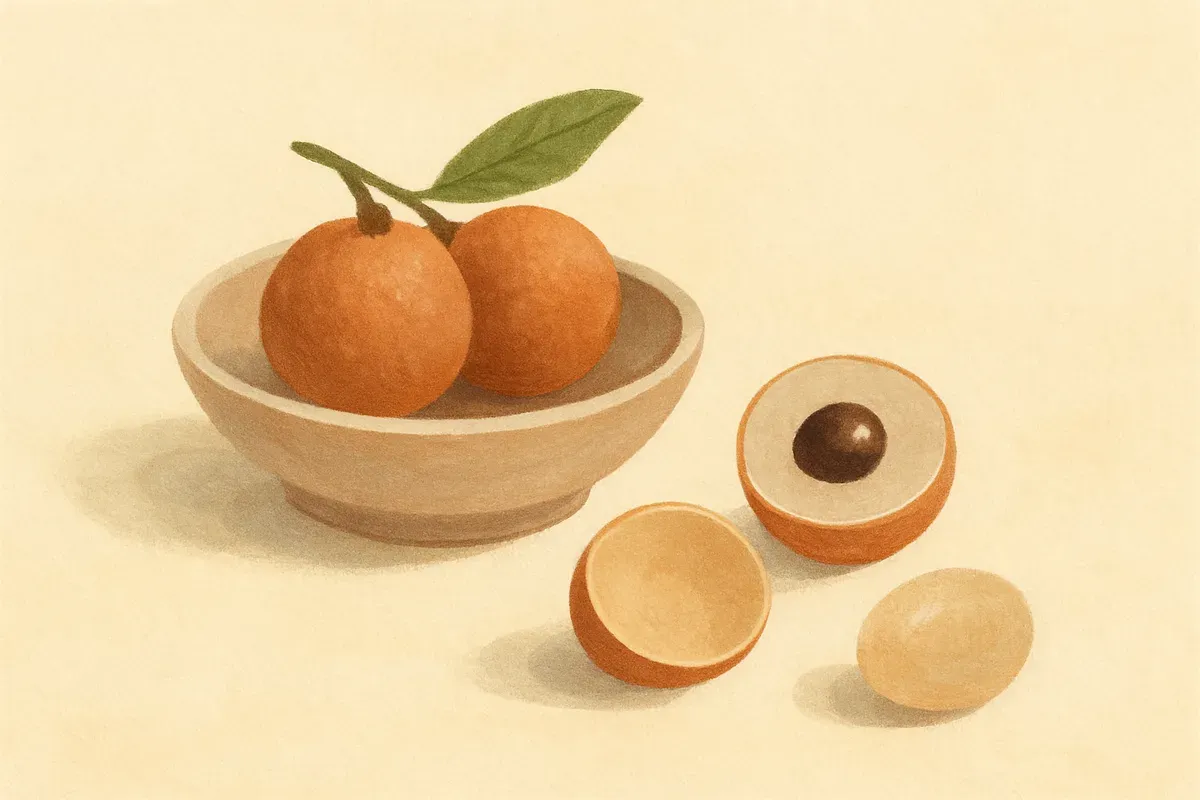
Longan (龙眼): sweetness that nourishes and calms
long yan (龙眼)
Dried longan sweetens confinement teas and soups and carries its own traditional role, nourishing blood and calming the spirit. How to use it and buy it.
Longan is the ingredient that makes confinement teas taste like a treat. Sticky, amber and intensely sweet, a few dried pieces turn a pot of plain herbs into something you look forward to, and the tradition asks it to do more than sweeten.
Its traditional role
In TCM, dried longan is classed as warm and sweet, and is said to nourish blood and calm the spirit. The first fits the whole logic of the month, which treats blood as depleted after birth. The second is quieter but well suited to confinement: a month of broken nights and big adjustment is one where something said to settle the mind earns its place. Longan turns up in brews meant to calm as much as to nourish, often alongside red dates.
In the kitchen
Its everyday job is sweetness and depth. Dried longan is so sweet that a tea or soup containing it rarely needs added sugar, which is part of why the confinement kitchen leans on it. A small handful, four to six pieces, is plenty for a pot; more turns a brew cloying rather than richer.
Buy dried longan flesh that is soft, sticky and deep amber, not hard, blackened or dusty. It is sometimes sold on the shell and sometimes as loose dried flesh; the loose flesh is easier to use. It keeps for many months in an airtight jar.
Longan deepens the sweetness of red date and goji tea, and pairs naturally with red dates across the Recipes section. For the wider role of sweet, warming, blood-nourishing foods, see qi, blood, cold and wind.
Common questions
What is longan?
A small round fruit related to the lychee, with translucent flesh around a single dark seed, from which it takes its Chinese name, dragon eye. Fresh in summer, it is dried for year round use, when it becomes chewy, sticky and very sweet.
What does it do in a dish?
Practically, it sweetens and adds depth, so a tea or soup needs no added sugar. Traditionally, longan is said to nourish blood and calm the spirit, which is why it appears in brews meant to settle as well as nourish, a useful quality in a sleep-deprived month.
How much should I use?
A small handful, four to six pieces, for a pot of tea or soup. It is very sweet, so more makes a brew cloying rather than better. Taste as you go and add rather than starting with a lot.
Can I use fresh or canned longan instead?
Dried is what confinement cooking calls for, since drying concentrates the sweetness and the warming quality the tradition wants. Fresh longan is a lovely fruit but milder, and canned longan in syrup is too watery and sugary for this purpose.