Chinese yam (淮山): the gentle spleen tonic
huai shan (淮山)
Chinese yam, huai shan, is the mild, food-like tonic in confinement soups from the first days. Why the tradition prizes it for digestion, and how to use it.
Most confinement tonics carry a warning to wait: too strong for the first days, better once appetite returns. Chinese yam is the reassuring exception. Mild, starchy and quietly strengthening, it is one of the few tonic ingredients the tradition is happy to put in the pot from the very beginning.
Why the spleen
In TCM, Chinese yam is prized above all for strengthening the spleen, the system the tradition treats as the seat of digestion and the base from which the body rebuilds after birth. It also nourishes the lungs and kidneys, the deeper reserves. What makes it unusual is that it does all this gently, tonifying without the heat or heaviness of the stronger herbs. The idea of shoring up digestion so that everything else can be absorbed sits right at the centre of the qi, blood, cold and wind framework.
Gentle enough for the first week
The delicate early days favour soft, easily digested food, which is exactly why tonics like astragalus are usually held back. Huai shan is different: its mildness lets it join the earliest soups, giving a little strengthening support at a point when nothing stronger would be welcome. For where the gentle first days sit in the arc of the month, see how the 30 days are structured.
In the kitchen
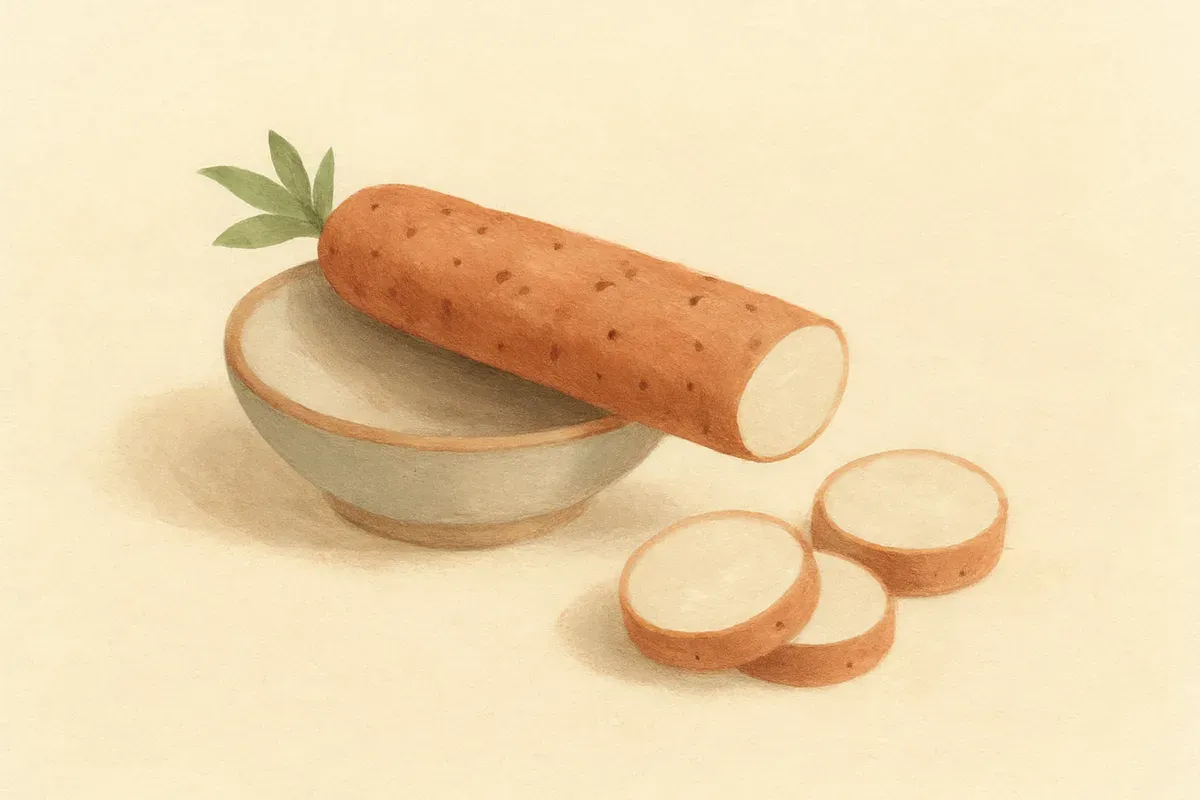
Chinese yam is sold as dried white slices or discs. Give them a short soak, then simmer them into a chicken or pork soup until soft, where they turn starchy and mild and thicken the broth a touch. They sit naturally alongside dang shen, red dates and goji in a gentle everyday tonic pot, and the softened slices are pleasant to eat. Choose slices that are firm, white and unbroken rather than grey or crumbling, and keep them airtight and dry.
Sources
- The Zuo Yuezi Guide
- Zuo Yuezi: An American Mother's Guide to Chinese Postpartum Recovery (Guang Ming Whitley)
Common questions
What is Chinese yam, or huai shan?
It is the dried root of Chinese yam, a mild, faintly sweet tonic used in soups and congee. Despite the name it is not the orange sweet potato sold as yam in the West; it is a separate plant valued in Chinese cooking and medicine for its gentleness.
Is it suitable in the first days after birth?
Yes, and that is part of its appeal. Where stronger tonics are held back for the rebuilding weeks, huai shan is gentle enough to go into the earliest soups, because it supports digestion rather than taxing a tender system.
How do I cook with it?
Give the dried slices a brief soak, then simmer them into a chicken or pork soup until soft. They turn starchy and mild, thickening the broth a little, and can be eaten along with the soup.