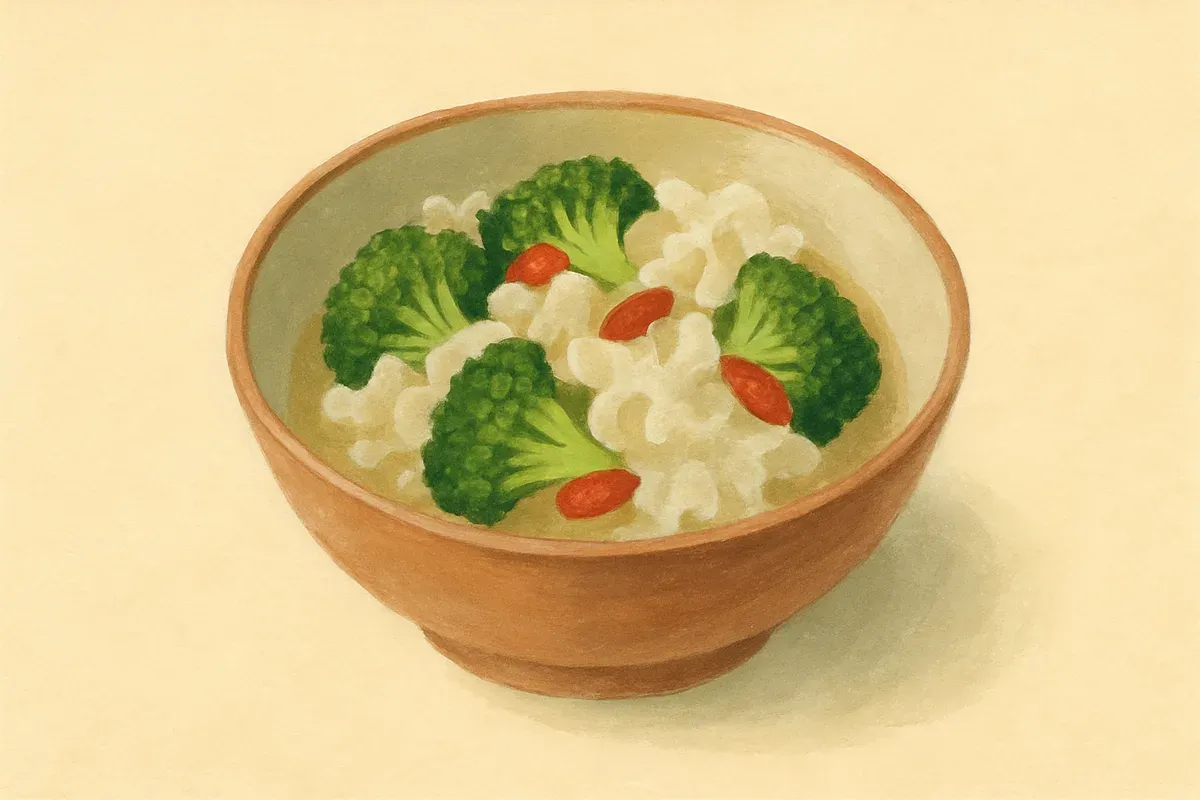
Broccoli with white fungus and goji (雪耳枸杞西兰花)
xue er gou qi xi lan hua (雪耳枸杞西兰花)
Crisp broccoli tossed with silky white fungus and goji berries in a light ginger glaze. A pretty, nourishing vegetable dish for any week.
Not every confinement dish is brown and braised. This one is bright and pretty: crisp green broccoli, silky white fungus and little red jewels of goji, in a light ginger glaze. It brings colour and texture to a table that can otherwise feel heavy.
Why this dish
White fungus is valued in the tradition as gently nourishing and moistening, and goji as a mild blood tonic, so a simple vegetable plate can still carry a little of the month’s intent. Cooked warm with ginger, blanched rather than raw, it fits the tradition’s approach to vegetables while feeling fresh and light.
A little care with the fungus
The one thing to plan for is the soak: white fungus needs twenty minutes or more to turn properly silky. Trim its firm core, blanch the broccoli to set its colour, and the stir-fry itself takes only minutes.
For the tradition’s view on vegetables in the month, see should I avoid cold food and cold drinks.
The recipe
- Prep
- 15 min
- Cook
- 8 min
- Total
- 23 min
- Serves
- 3 as part of a meal
Why this ingredient
White fungus (雪耳)
White fungus, also called snow fungus, is prized in the tradition as gently nourishing and moistening, often associated with the lungs and skin, and it turns silky and slightly gelatinous when soaked and cooked. It carries little flavour but a lovely texture, and it appears in both sweet tonic soups and savoury dishes like this one, adding a soft counterpoint to crisp broccoli.
Why this ingredient
Goji berries (枸杞)
Goji berries are the confinement kitchen’s everyday tonic, associated in the tradition with nourishing blood and the liver and with brightening the eyes. They need barely any cooking, so they go in at the end to stay plump, and their small burst of sweetness and colour lifts a simple vegetable plate.
Ingredients
- 250 g broccoli, cut into florets Cut even florets so they cook at the same rate.
- 10 g dried white fungus, soaked until soft Swells and turns silky; trim the hard core and tear into pieces.
- 1 tablespoon goji berries, rinsed Added near the end so they stay plump and bright.
- 10 g ginger, sliced For warmth, as the tradition wants with vegetables.
- 1 tablespoon neutral oil and 1 teaspoon sesame oil For the stir-fry and a little confinement warmth.
- 1 teaspoon oyster sauce, a splash of water and a pinch of salt A light glaze; the vegetables should stay fresh.
Method
- 1 Soak the white fungus in warm water until soft and swollen, then trim away the firm yellow core and tear into small pieces.
- 2 Blanch the broccoli florets in boiling water for 1 to 2 minutes until bright green, then drain.
- 3 Heat the oils in a wok and fry the ginger for a minute until fragrant.
- 4 Add the broccoli and white fungus and stir-fry for 2 minutes, adding the oyster sauce, salt and a splash of water to glaze.
- 5 Stir in the goji berries, toss for a final minute, and serve warm.
Notes and substitutions
- White fungus needs a good soak; give it 20 to 30 minutes so it turns fully silky before cooking.
- Blanching the broccoli first sets its colour and keeps the stir-fry quick.
- This is as much about looks as flavour: the white, green and red make it one of the prettier dishes on the table.
Before you cook this
- A light, everyday vegetable dish. Serving it warm and cooked with ginger keeps it in line with the tradition.
Common questions
What is white fungus?
White fungus, or snow fungus, is a pale, frilly edible fungus sold dried at Chinese grocers. Soaked, it turns silky and slightly gelatinous. The tradition prizes it as gently nourishing and moistening, and it is used in both sweet tonic soups and savoury dishes.
Can I use other vegetables?
Yes. Cauliflower, snow peas or asparagus all suit the same treatment with white fungus and goji. The method stays the same: blanch the main vegetable, then stir-fry briefly with ginger and a light glaze.
Is broccoli suitable during confinement?
Cooked warm, yes. The tradition is cautious about raw and cold vegetables, so broccoli is blanched and stir-fried with ginger rather than served raw, which brings its fibre and nutrients to the table in a warm, easily digested form.