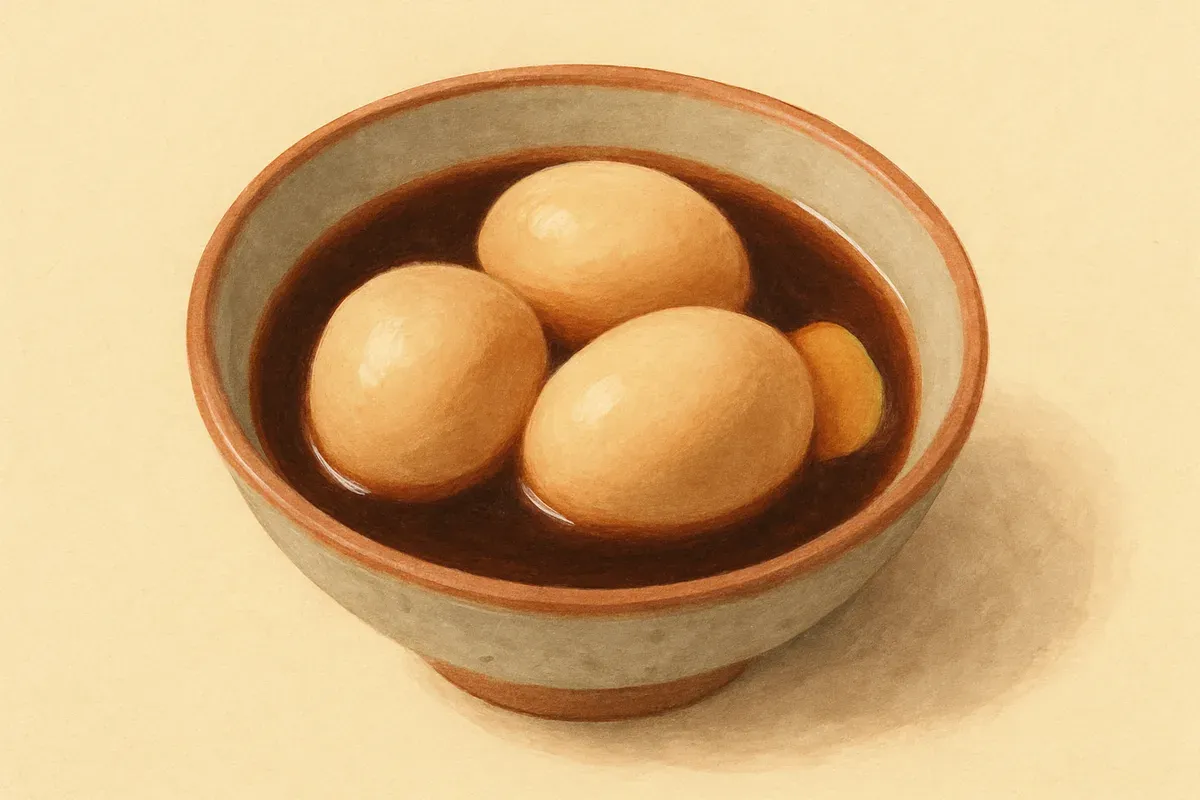
Sweet vinegar eggs (甜醋煮鸡蛋)
tian cu zhu ji dan (甜醋煮鸡蛋)
Eggs simmered in sweetened black vinegar with ginger, from the same tradition as the pig trotter vinegar. A warming, blood nourishing dish of the early weeks.
The most famous Cantonese confinement dish, pig trotter in sweetened black vinegar, is a project. Sweet vinegar eggs are its easy everyday cousin: the same warming vinegar and ginger, but with just eggs, ready in half an hour and kept on hand for weeks.
Why this dish
Sweetened black vinegar and old ginger are the heart of it, both classed as warming and, in the tradition, as helping the body clear and rebuild in the early days. Eggs add gentle protein and soak up the dark, sweet vinegar. It is a way to keep the benefit of the trotter vinegar within reach without the long cook.
Keep a pot going
Like the trotter version, this improves over days in the fridge as the eggs steep, so make a pot and warm a serving whenever you want one. Use a non-reactive pot, and if you are already making the full trotter vinegar, simply add a few extra eggs to it.
For more on the vinegar itself, see our spotlight on sweetened black vinegar.
The recipe
- Prep
- 10 min
- Cook
- 30 min
- Total
- 40 min
- Serves
- 4 eggs
Why this ingredient
Sweetened black vinegar (甜醋)
Sweetened black vinegar is the base of the best-known Cantonese confinement dish, the pig trotter vinegar, and it is classed in the tradition as warming and as helping the body clear and rebuild after birth. It is a sweet, mellow, dark vinegar quite unlike sharp Western kinds; Pat Chun is the brand most families reach for. Simmering eggs in it is the simplest way to make use of a pot.
Why this ingredient
Old ginger (老姜)
Old ginger is the constant partner to sweetened vinegar in confinement cooking, adding warmth and cutting the vinegar’s sweetness. Frying it first draws out its pungency, and a generous amount is used, in keeping with the tradition’s belief in ginger as a warming ingredient especially suited to the early postpartum days.
Ingredients
- 4 eggs, hard-boiled and peeled Cook them so they are just set, then peel while warm.
- 500 ml sweetened black vinegar The Cantonese confinement kind. Pat Chun sweetened black vinegar is the widely used brand.
- 80 g old ginger, peeled and sliced thickly A generous amount; it is fried first to bring out its warmth.
- 1 to 2 tablespoons brown sugar, to taste Only if you want it sweeter; the vinegar is already sweetened.
- 1 teaspoon oil, for frying the ginger
Method
- 1 Hard-boil the eggs, cool them, and peel them. Set aside.
- 2 Heat the oil in a pot and fry the ginger over medium heat for 5 minutes until fragrant and the edges curl.
- 3 Pour in the sweetened black vinegar, add the brown sugar if using, and bring to a gentle simmer.
- 4 Add the peeled eggs and simmer gently, uncovered, for 20 to 25 minutes, so they take on the colour and flavour of the vinegar.
- 5 Serve an egg or two warm with a little of the ginger and vinegar spooned over. The rest keeps in the pot in the fridge.
Notes and substitutions
- This is really a smaller, easier version of the pig trotter vinegar, so if you are already making that, add a few eggs to the same pot.
- The flavour deepens over several days in the fridge; reheat gently before eating and always eat it warm.
- Use a non-reactive pot, such as stainless steel or clay, since vinegar reacts with aluminium.
Before you cook this
- Sweetened vinegar is acidic; some people find a lot of it uncomfortable, especially with reflux, so start with a modest amount.
- It is sweet, so keep portions sensible if you are watching blood sugar.
Common questions
How is this related to pig trotter vinegar?
It comes from the same tradition and uses the same base of sweetened black vinegar and old ginger. The famous version simmers pig trotter and eggs in the vinegar over a long time; this is a pared-back version with just the eggs, which is far quicker and easier to keep on hand.
Which vinegar should I use?
A Cantonese sweetened black vinegar made for this purpose, not a sharp Western vinegar. Pat Chun is the brand most widely used and is sold at Chinese grocers. It is dark, sweet and mellow, which is what makes the dish gentle rather than harsh.
When is it eaten?
It belongs to the early weeks, alongside the pig trotter vinegar, when the warming, clearing quality of the vinegar and ginger is considered most helpful. A pot is often kept going in the fridge and warmed a serving at a time.