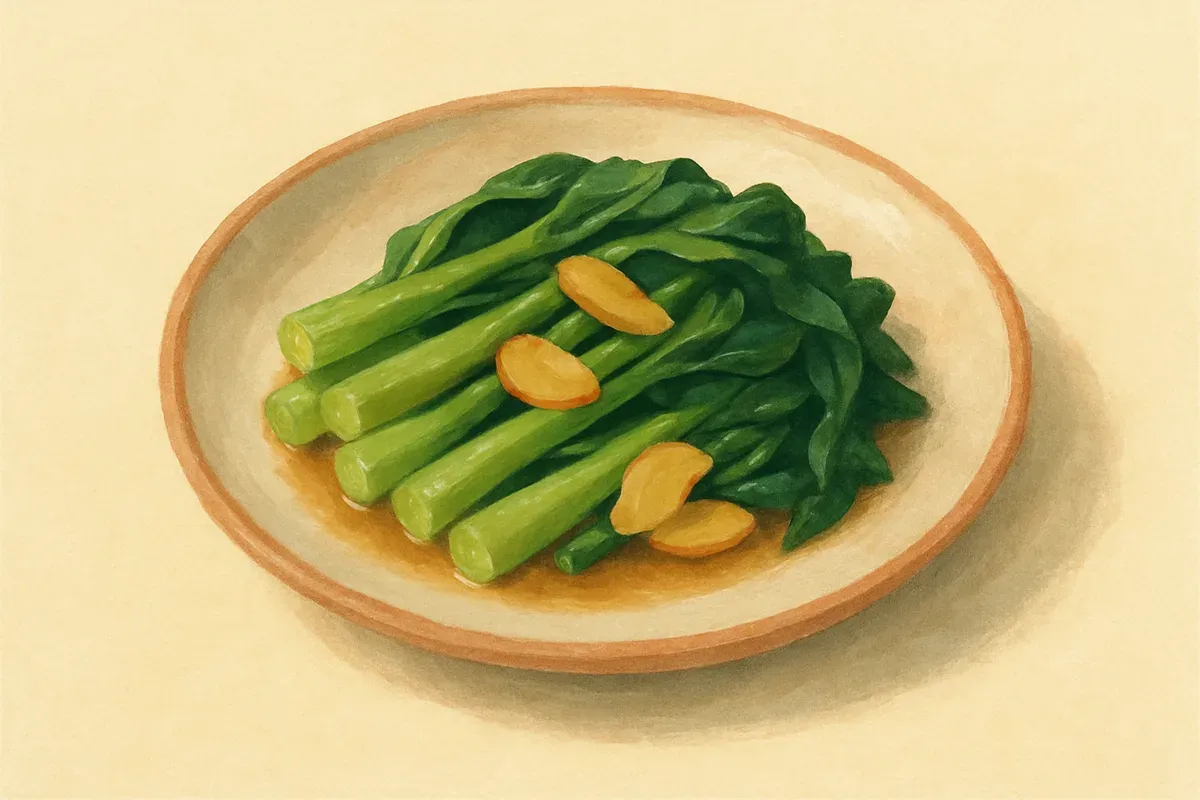
Stir-fried kai lan with ginger (姜炒芥兰)
jiang chao jie lan (姜炒芥兰)
Warm greens for the confinement table: Chinese broccoli blanched and tossed with plenty of ginger and garlic. The side the rich dishes need.
Confinement menus lean hard on warming meat, sesame oil and soup, and after a few days the table starts to feel heavy. A simple plate of greens is the answer, and cooking it with plenty of ginger keeps it squarely within the tradition rather than at odds with it.
Why this dish
Two reasons, one traditional and one plainly practical. The tradition is cautious about raw and cooling vegetables in the early weeks, so greens are blanched and stir fried warm with ginger to bring them onside. And on the practical level, the fibre in vegetables is one of the simplest guards against the constipation that is so common after birth, especially on a rich, meat heavy diet.
Keep it quick
The whole point of this dish is that it is fast, the thing you throw together while a braise or soup takes care of itself. Blanch the greens first so the stir fry is a matter of a minute or two, keep the ginger moving so it does not catch, and season with a light hand.
For the thinking behind warm over cold food, see should I avoid cold food and cold drinks. For another quick green side, see green beans with wood ear.
The recipe
- Prep
- 5 min
- Cook
- 8 min
- Total
- 13 min
- Serves
- 3 as part of a meal
Why this ingredient
Old ginger (老姜)
Ginger is what turns a plate of green vegetables into confinement food. The tradition treats raw and cooling vegetables with caution in the early weeks, and cooking greens with plenty of warming ginger is the standard way to bring them onto the table without the cold quality it wants to avoid. It is the same logic behind blanching them first rather than serving anything raw.
Why this ingredient
Kai lan (芥兰)
Chinese broccoli is a sturdy leafy green that holds up to a quick blanch and stir fry without collapsing. Greens like it supply the fibre that keeps digestion moving, a plain but real concern after birth, and eating them warm and well cooked is the tradition’s way of getting that benefit without the raw, cooling quality it avoids.
Ingredients
- 300 g kai lan (Chinese broccoli), ends trimmed, thick stems split Splitting the thick stems lets them cook in the same time as the leaves.
- 20 g old ginger, cut into fine matchsticks A generous amount, so the dish reads as warming rather than plain greens.
- 2 cloves garlic, sliced Adds fragrance and, like ginger, is considered warming.
- 1 tablespoon sesame oil or a neutral oil Sesame oil leans it further towards the confinement palette.
- 2 tablespoons water or stock A splash to steam the stems through at the end.
- A pinch of salt, and a splash of rice wine (optional) Season lightly; the greens should stay fresh tasting.
Method
- 1 Bring a pot of water to the boil with a pinch of salt and a few drops of oil. Blanch the kai lan for 1 to 2 minutes until just tender, then drain well. Blanching first keeps the stir fry quick and the colour bright.
- 2 Heat the sesame oil in a wok over medium heat and fry the ginger matchsticks and garlic for a minute until fragrant, without letting them brown.
- 3 Add the drained greens and toss for a minute to coat them in the aromatic oil.
- 4 Add the splash of water or stock and the optional rice wine, season with salt, and toss for another minute until the stems are tender and glossy. Serve hot.
Notes and substitutions
- Any sturdy Asian green works: choy sum, gai choy or bok choy all take the same treatment. Adjust the blanching time to the thickness of the stems.
- A few goji berries or a scatter of blanched wolfberries add colour and sweetness if you want to dress it up.
- Keep it moving in the wok so the ginger does not catch and turn bitter.
Before you cook this
- The tradition is wary of raw and cold vegetables in the early weeks. Serving greens blanched or stir fried, warm and with ginger, is the usual way to include them.
Common questions
Are vegetables allowed during confinement?
Yes, and they matter. The caution is about temperature and preparation rather than vegetables themselves: the tradition prefers them cooked and warm rather than raw and cold, often with ginger, which is exactly how this dish serves them.
Why blanch the greens first?
It sets the colour, softens tough stems, and lets the final stir fry be very quick so the ginger and garlic stay fragrant rather than burning. It also ensures the greens are thoroughly cooked, which the tradition prefers in the early weeks.
Which greens are best?
Any sturdy Chinese leafy green. Kai lan and choy sum are the usual choices because they hold their texture, but the method suits most cooked greens.