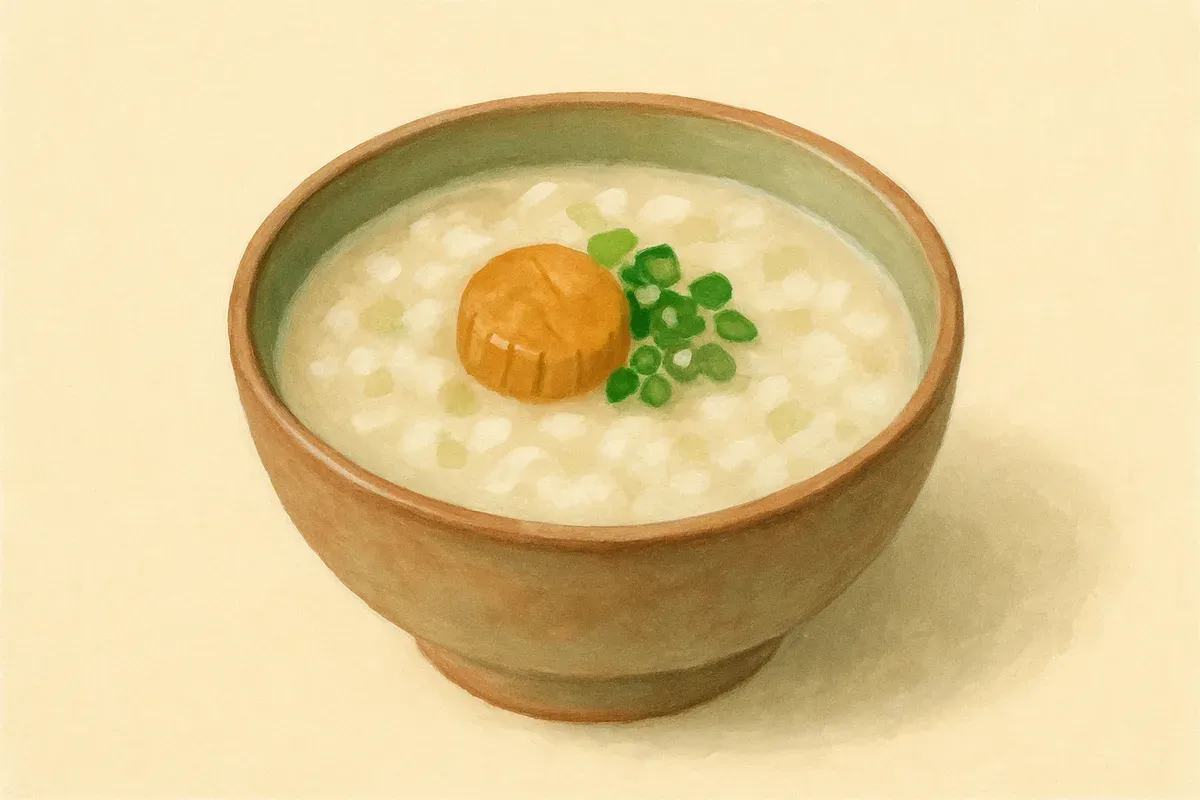
Dried scallop congee (瑶柱粥)
yao zhu zhou (瑶柱粥)
A savoury, nourishing confinement congee: soft rice simmered with dried scallops and ginger into a comforting bowl. Gentle enough for the earliest days.
Plain rice congee is the quiet backbone of the confinement kitchen, and a handful of dried scallops is the simplest way to turn it into something that tastes restorative. Warm, soft and deeply savoury without any heavy seasoning, this is comfort food for the earliest days and well beyond.
Why this congee
The magic is the dried scallops. Their concentrated umami does the work of any rich sauce, so the congee tastes complete while staying gentle, and the tradition treats them as quietly tonifying too. It sits alongside the plainer millet congee as one of the soft, easily eaten dishes the first days are built around.
Getting it creamy
Two things make a good congee: a high ratio of water to rice, and patience. Stirring now and then over a gentle simmer coaxes the grains to break down into a smooth, thick porridge. A short soak, or freezing the rinsed rice first, speeds it along. Finish with spring onion and a few drops of sesame oil, and see the other recipes for what to build on it as the weeks go on.
The recipe
- Prep
- 10 min
- Cook
- 1 hr
- Total
- 1 hr 10 min
- Serves
- 2 to 3 bowls
Why this ingredient
Dried scallops (瑶柱)
A few dried scallops carry an intense savoury depth that turns plain rice porridge into something restorative, and the tradition treats them as gently tonifying to the kidneys and spleen. Because they add richness rather than heaviness, they suit even the delicate early days.
Why this ingredient
Rice (米)
Soft rice congee is one of the first foods a new mother is given, warm and easily digested at a point when appetite is small. It is the gentle base the whole confinement diet is built on before the richer dishes arrive.
Ingredients
- 150 g white rice, rinsed A short soak, or freezing it first, gives a creamier congee.
- 4 dried scallops (conpoy), soaked and shredded, soaking water kept The savoury heart of the dish; the soaking water goes into the pot too.
- 1.8 litres water or light stock A high ratio of liquid to rice is what makes it soft and soupy.
- 3 slices old ginger, finely shredded For gentle warmth.
- Salt and white pepper to taste Season lightly; the scallops carry most of the flavour.
- 1 spring onion, sliced, and a few drops sesame oil to finish Added off the heat for freshness and aroma.
Method
- 1 Soak the dried scallops in warm water until soft, then shred them by hand along the grain, keeping the soaking water.
- 2 Put the rice, scallops, their soaking water, the remaining water or stock and the ginger in a large pot.
- 3 Bring to the boil, then lower to a gentle simmer and cook, stirring now and then, for 45 to 60 minutes until the grains have broken down and the congee is thick and creamy.
- 4 Season with salt and a little white pepper, then serve topped with spring onion and a few drops of sesame oil.
Notes and substitutions
- The congee thickens as it cools, so loosen it with hot water when you reheat.
- A knob of Chinese yam or some shredded chicken makes it a heartier meal.
- It keeps for two days and reheats well, an easy thing to have ready.
Before you cook this
- A gentle, everyday food with no special cautions. Keep the seasoning light.
Sources
- The Zuo Yuezi Guide
- Zuo Yuezi: An American Mother's Guide to Chinese Postpartum Recovery (Guang Ming Whitley)
Common questions
Do I need to soak the rice?
It helps but is not essential. A short soak, or freezing the rinsed rice beforehand, breaks down the grains so they cook into a creamier congee faster. Otherwise just allow a little longer cooking.
Can I add other things?
Yes. A little shredded chicken, some Chinese yam, or a soft-poached egg stirred in at the end all turn it into a more substantial meal. Keep additions gentle in the early days.
Why is congee so common in confinement?
Because it is warm, soft and very easy to digest at a time when appetite is small, which is exactly what the tradition wants for the first days. It is close cousin to the plain millet and rice congees eaten from the very start of the month.