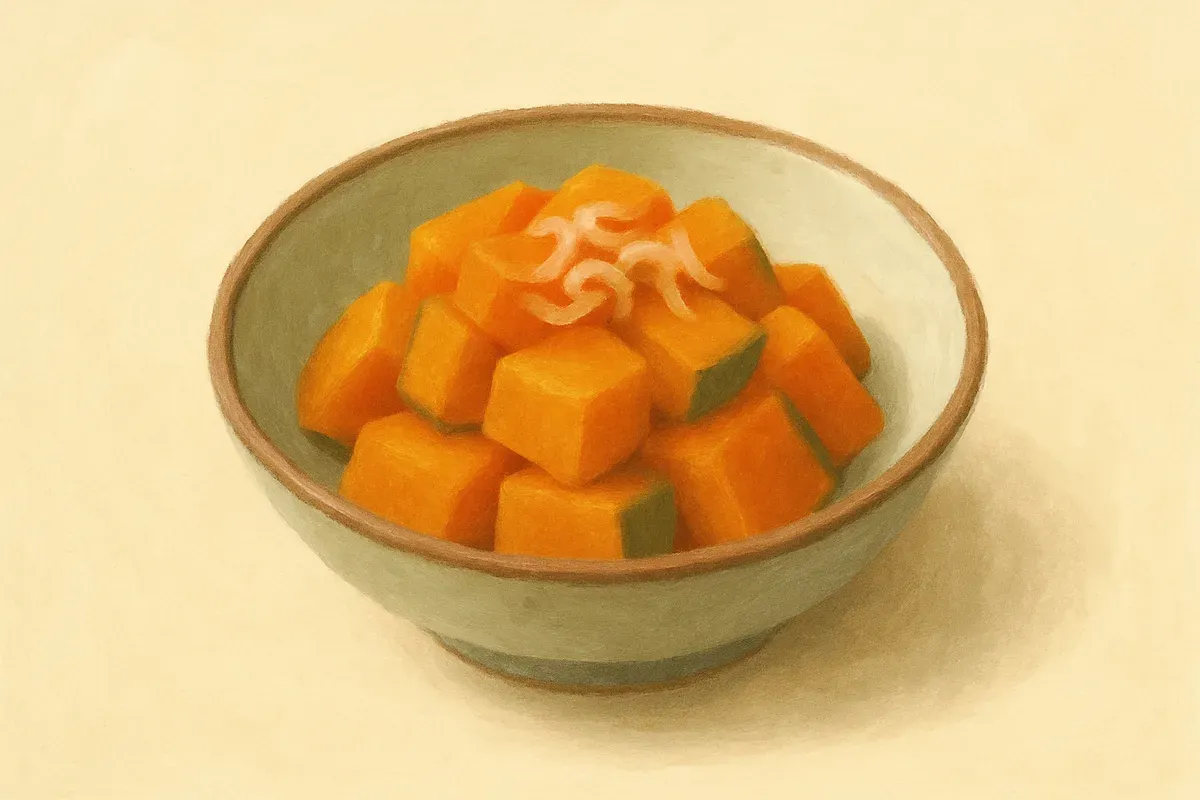
Pumpkin with dried shrimp (虾米焖南瓜)
xia mi men nan gua (虾米焖南瓜)
Soft, sweet pumpkin braised with savoury dried shrimp and ginger. An easy, comforting vegetable dish that suits any week of the month.
Pumpkin is one of the easiest vegetables to love during confinement: soft, sweet and comforting, and quick to cook. A short braise with a little dried shrimp gives the sweetness a savoury backbone and turns it into a proper dish.
Why this dish
The tradition treats pumpkin as gently warming and easy on the stomach, and its natural sweetness makes it a soothing thing to eat when appetite is uneven. The dried shrimp is the clever part: a spoonful lends a savoury, mineral depth that a plate of plain pumpkin would lack.
Barely a recipe
There is almost nothing to it. Fry the aromatics and shrimp, add the pumpkin, and let a splash of water braise it soft. Use a dense, sweet pumpkin like kabocha and it holds its shape; stir it hard and it turns to a comforting mash instead.
For more everyday confinement cooking, see our food and recipes section.
The recipe
- Prep
- 10 min
- Cook
- 15 min
- Total
- 25 min
- Serves
- 3 as part of a meal
Why this ingredient
Pumpkin (南瓜)
Pumpkin is a gently warming vegetable the tradition considers easy on the stomach and supportive of digestion and energy, and its natural sweetness makes it one of the most comforting things on the confinement table. It softens to a silky texture with only a short braise, so it is quick to cook, and it takes savoury flavours like dried shrimp beautifully.
Why this ingredient
Dried shrimp (虾米)
Dried shrimp are a confinement pantry staple, used in small amounts to give vegetables a savoury, mineral depth they could not reach alone. A little goes a long way, and here they turn a plate of sweet pumpkin into something rounded and satisfying, with a hit of protein and flavour from just a spoonful.
Ingredients
- 400 g pumpkin, peeled and cut into chunks A firm, sweet variety such as kabocha holds its shape and turns silky.
- 2 tablespoons dried shrimp, soaked briefly A small amount gives a big savoury lift. Soaking softens them.
- 15 g ginger, minced For warmth and to lift the sweetness of the pumpkin.
- 2 cloves garlic, minced For fragrance with the shrimp.
- 1 tablespoon neutral oil To fry the aromatics and shrimp.
- 100 ml water and a pinch of salt A little liquid to braise the pumpkin soft.
Method
- 1 Soak the dried shrimp in warm water for 10 minutes to soften, then drain.
- 2 Heat the oil in a pan and fry the ginger, garlic and drained shrimp for a minute until very fragrant.
- 3 Add the pumpkin and turn to coat it in the aromatic oil.
- 4 Add the water and a pinch of salt, cover, and braise gently for 10 to 12 minutes until the pumpkin is soft.
- 5 Uncover and let any excess liquid cook off, so the pumpkin is glossy but not watery. Serve warm.
Notes and substitutions
- Kabocha (Japanese pumpkin) has thin, edible skin and a dense, sweet flesh that holds together well; there is no need to peel it fully.
- Do not stir too vigorously once the pumpkin is soft, or it will break down into a mash, though that is no bad thing if you prefer it that way.
- A scatter of spring onion at the end freshens it up.
Before you cook this
- A gentle, comforting dish with no special cautions. Keep the salt light, as the dried shrimp are already savoury.
Common questions
Is pumpkin good during confinement?
Yes. It is a gently warming vegetable that the tradition considers easy on digestion and supportive of energy, and its natural sweetness and soft texture make it comforting and simple to eat, which suits the month well.
Can I make it vegetarian without the shrimp?
Yes. Leave out the dried shrimp and add a few soaked shiitake or a little light soy for savoury depth instead. The pumpkin, ginger and garlic still make a lovely, comforting dish.
Which pumpkin should I use?
A firm, sweet variety such as kabocha is ideal, as it holds its shape and turns silky. Softer, watery pumpkins can collapse into a purée, which is fine if that is the texture you want.